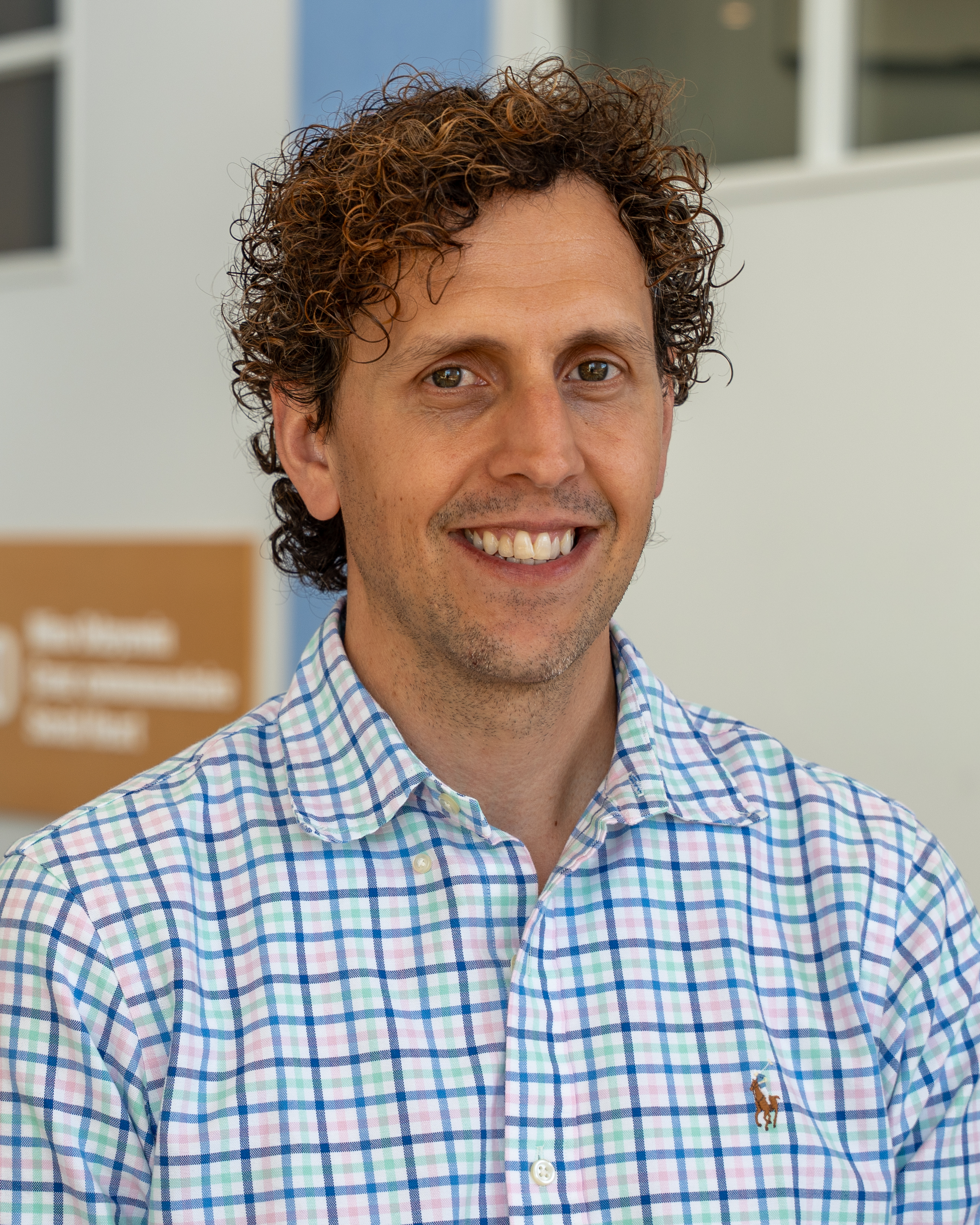
Brett Shannon
Brett Shannon
Professeur adjoint

2024, Ph.D., Université de l’Illinois, Chicago
2015, baccalauréat en médecine, baccalauréat en chirurgie (MBBS), Université du Queensland
2011, maîtrise en philosophie en épidémiologie appliquée, Université nationale australienne
2009, baccalauréat en sciences appliquées, Université de technologie du Queensland
2009, baccalauréat en administration des affaires, Université de technologie du Queensland

Salle 
LEE 518K


Biographie

Brett Shannon est professeur adjoint à la Faculté des sciences de la santé de l’Université d’Ottawa. Médecin-chercheur australien autochtone (Ngugi), le professeur Shannon intègre à ses travaux des méthodes épidémiologiques, des méthodes de recherche autochtones et des approches ancrées dans les communautés pour répondre aux enjeux complexes touchant la santé des Autochtones

Le professeure Shannon n'accepte pas actuellement les demandes de direction de thèse.

Intérêts de recherche

  • Santé autochtone
  • Analyse de données à grande échelle
  • Indicateurs cliniques
  • Méthodes de recherche autochtones
  • Prévention des blessures
  • Santé et sécurité au travail

Research

Les recherches du professeur Shannon portent sur les services de santé gérés par les communautés, la santé environnementale, la santé et la sécurité au travail ainsi que la santé mentale. Ancré dans le leadership autochtone, les priorités des communautés et des partenariats durables, son programme de recherche conjugue des méthodes centrées sur la santé des populations et des approches autochtones fondées sur la participation des communautés afin de mieux comprendre les déterminants de la santé et du bien-être.

Brett Shannon travaille notamment à l’élaboration d’indicateurs et des cadres de mesure définis par les Autochtones qui reflètent les priorités des communautés, renforcent les systèmes et les services de santé, et permettent une significative de la santé et du bien-être. Il prend appui sur la recherche pour mettre au point des solutions concrètes et orientées par les communautés qui font progresser l’équité en santé et améliorent la santé des communautés autochtones.


Publications

  • Shannon, B., Ryder, C., Abasilim, C., Almberg, K. S., Bonney, T., Forst, L., et Friedman, L. S. (2025). Occupational determinants of health and well-being for Indigenous populations in the United States: Findings from the National Health Interview Survey, 2020-2022. American Journal of Public Health, 115(5), 736-746. https://doi.org/10.2105/AJPH.2024.307959
  • Shannon, B., Jennings, W., et Friedman, L. S. (2022). Systematic scoping review of occupational health injuries and illnesses among Indigenous workers. Occupational and Environmental Medicine, 79(9), 577-585. https://doi.org/10.1136/oemed-2022-108264
  • Shannon, B., Almberg, K. S., Ryder, C., Bonney, T., Forst, L., et Friedman, L. S. (2025). Depressive symptoms and work in Indigenous people. Journal of Affective Disorders, 381, 329-336. https://doi.org/10.1016/j.jad.2025.04.007
  • Ivers, R., Ryder, C., et Shannon, B. (2024). Addressing equity gaps in fall-related injuries. The Lancet Public Health, 9(8), e534-e535. https://doi.org/10.1016/S2468-2667(24)00155-5
  • Shannon, B., Abasilim, C., et Friedman, L. S. (2025). Emergent occupational injuries presenting to hospital during increasing and extreme heat days in Illinois (USA). International Journal of Biometeorology, 69(5), 975-987. https://doi.org/10.1007/s00484-025-02871-1
  • Shannon, B., Ryder, C., Abasilim, C., Almberg, K., Bonney, T., et Friedman, L. S. (2024). Work-related injuries and illnesses (WRII) presenting to Illinois hospitals, 2017-2021: The importance of emergency department (ED) data. American Journal of Industrial Medicine, 67(11), 1006-1019. https://doi.org/10.1002/ajim.23658
  • Shannon, B., Almberg, K., Bonney, T., Möller, H., Ivers, R. Q., Ryder, C., Koppel, S., Friedman, L. S., et Ehsani, J. (2026). Depression and rideshare work in Australia. Transportation Research Part F: Traffic Psychology and Behaviour, 121, 103712. https://doi.org/10.1016/j.trf.2026.103712
  • Jennings, W., Spurling, G., Shannon, B., Hayman, N., et Askew, D. (2021). Rapid review of five years of Aboriginal and Torres Strait Islander health research in Australia: Persisting under-representation of urban populations. Australian and New Zealand Journal of Public Health, 45(1), 53-58. https://doi.org/10.1111/1753-6405.13072
  • Sallows, G., Sharpe, P., Henderson, P., Otieno, L., Ellis, D. Y., Kelly, N., Foster, M., Gabbe, B., Fitzgerald, M., Coombes, J., Wolfenden, L., Shannon, B., O’Reilly, G., Mittinty, M., Hunter, K., Omodei-James, S., Azfali, H. H. A., Toombs, M., et Ryder, C. (2026). Equity, evidence and Indigenous knowledges in PROMs in Australian injury research: A systematic review. Quality of Life Research, 35, 250. https://doi.org/10.1007/s11136-026-04353-2
  • Ryder, C., Sharpe, P., Omodei-James, S., Sallows, G., Shannon, B., Möller, H., Campbell, M., Kimlin, R., Porykali, B., Hossain, S., Kelly, N., Ellis, D., Ting, T., Gray, J., Afzali, H., et Ivers, R. Q. (2025). “I didn’t know nothing”: Yarning up on access to compensation from road traffic injury with Aboriginal people. Journal of Transport and Health, 42, 102055. https://doi.org/10.1016/j.jth.2025.102055
  • Shannon, B., Friedman, L. S., Hellinger, A., Almberg, K., et Ehsani, J. (2024). Work-related crashes in rideshare drivers in the United States. Journal of Safety Research, 89, 13-18. https://doi.org/10.1016/j.jsr.2024.01.005
  • Abasilim, C., Friedman, L. S., Shannon, B., et Holloway-Beth, A. (2024). Relationship between civilian injuries caused during contact with law enforcement and community-level sociodemographic characteristics. Journal of Urban Health, 101(3), 508-521. https://doi.org/10.1007/s11524-024-00865-9
  • Shannon, B., Abasilim, C., et Friedman, L. S. (2023). Trends in assault-related hospitalizations during the SARS-CoV-2 pandemic. Injury, 54(4), 1106-1112. https://doi.org/10.1016/j.injury.2023.02.010
  • Abid, I. B., Shannon, B., et Friedman, L. S. (2026). Short- and long-term effect of COVID-19 pandemic on rates of suicide attempts treated in Illinois hospitals. American Journal of Epidemiology, 195(1), 229-236. https://doi.org/10.1093/aje/kwae482