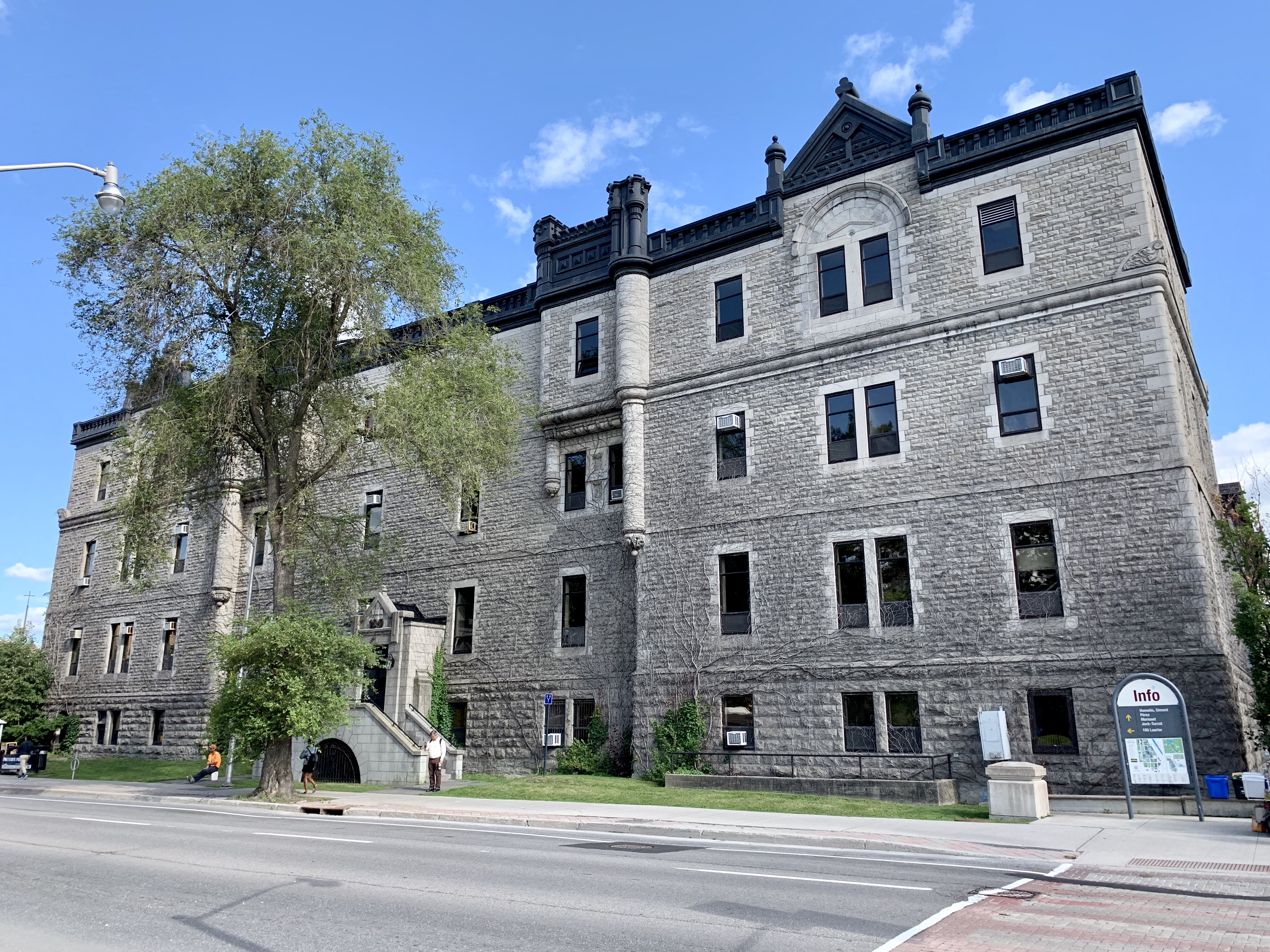

What is the science of language? Where does language come from? What is the nature of language structure and how is meaning encoded into language? Advances in research and new technologies are revolutionizing the way we try to answer these questions. Using the latest equipment and investigative approaches, our research laboratories make it possible for you to analyze spoken sounds, track eye movement and brain activity during language processing and explore language acquisition and language variation and change, in addition to probing dozens of other theoretical and empirical aspects of familiar and unfamiliar languages.

Linguistics
Program overview
DURATION
OFFER
LANGUAGE
OPTIONS
Why choose this program

Cutting-Edge Research Facilities: Work in state-of-the-art research labs equipped with the latest technology to investigate various aspects of language, from sound patterns and syntax to first- and second-language acquisition, as well as language contact, variation and change.
Diverse Program Options: Choose from a range of undergraduate programs, including an Honours BA, a Major or Minor in Linguistics, as well as interdisciplinary options like Honours BA in Psychology and Linguistics, tailored to suit your academic interests and career goals.
Specialized Courses: Explore fascinating topics in linguistics through elective courses such as Language and Mind, Aboriginal Language, and Language in Society, to gain insight into the diverse facets of language structure, meaning, and usage.
Varied Career Pathways: Prepare for a wide range of careers, such as a linguist, audiologist, speech-language pathologist, teacher, or computational linguist with potential combinations in second-language teaching, psychology or sociology.
Generous Scholarship Support: Benefit from a generous scholarship program that recognizes academic achievement and financial need, ensuring that you receive the support you need to excel in your study of linguistics at the University of Ottawa.
Browse program options
Most extensive and focused study in Linguistics
Can be combined with a minor in another area.
Admission requirements and deadlines for Linguistics
After your studies

After completing your undergraduate studies in Linguistics, you have two main paths to consider: continuing your education or entering the workforce.
You may choose to pursue graduate studies, such as a Master’s degree (MA), to deepen your knowledge and develop advanced research, analytical, and critical thinking skills. A research-based MA is ideal if you’re interested in specializing in a topic or eventually pursuing a PhD.
Alternatively, you can move directly into the job market. Your degree can lead to a variety of careers in fields such as Linguist, Audiologist, Speech Language Pathologist, Language Teacher, Computational Linguist. These opportunities allow you to apply your skills in pattern recognition, data analysis, and cross-cultural communication in real-world settings.
Whether you choose further studies or enter the workforce, your degree provides a strong foundation to build a career in Linguistics.
Tuition and fees
Student experience

Undergraduate Student Association (ADELSA)
ADELSA stands for Association des Étudiants en Linguistique/Linguistic Student Association. The association is there to represent the student body at the departmental and faculty levels, organizes social events and informs student of important news happening in the Department of Linguistics and provide academic information.
ADELSA representatives participate in the internal governance of the Department, through the departmental assembly and various committees.
ADELSA representatives participate in the internal governance of the Department, through the departmental assembly and various committees.

Graduate Student Association (ADLINGA)
The Graduate Student Association serves the interests of graduate students in the Department and represents them through the departmental assembly and various committees. The association comprises all graduate students in the Department. A president and secretary-treasurer are elected each year at the beginning of October. The association meets monthly to discuss the needs and concerns of graduate students and is active year-round, including during the summer semester.

Student Association of the Faculty of Arts (SAFA)
SAFA represents the interests of undergraduate students of the Faculty of Arts within the UOSU, the Faculty, the University, the community, and the provincial and federal governments. The students’ association also works to foster a sense of community through social, academic, and cultural events, while at the same time offering a variety of services to its members.
Need help?

Contact us
Question about this program? We are here to help!

Meet our student recruitment officer
Does the transition to university seem a bit intimidating?
Book an appointment with our student recruitment officer