

Centre for Extended Reality

Accelerating innovation through immersive technologies, digital twins and artificial intelligence.

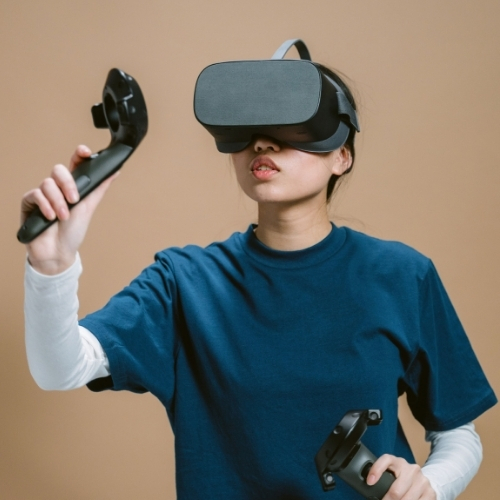
Person wearing virtual reality goggles and experiencing the VR.
The Centre for Extended Reality (XR) is the University of Ottawa’s collaboration hub for extended reality, digital twins, haptics, spatial computing and artificial intelligence. Based in the Faculty of Engineering, the Centre brings together researchers, students and partners to develop, test and deploy immersive solutions that advance research, transform learning and create measurable impact across industry, government and society.

About the Centre for XR

People looking at at 360 screen.
INNOVA, University of Ottawa.

The Centre for extended reality (XR) brings together multidisciplinary research teams, advanced immersive infrastructure and world-class expertise to co-develop and validate next-generation XR, digital twin and AI-enabled solutions.

Through a bilingual innovation ecosystem, access to the INNOVA Centre’s immersive technologies, and strong connections to government, industry and the Kanata North technology hub, the Centre translates emerging technologies into practical, scalable and measurable impact.

Why immersive solutions require deep domain expertise

Developing digital twins, immersive training environments and AI-enabled spatial systems requires more than software development.  Effective solutions depend on accurately modelling physical systems, human behaviour, operational processes and real-world constraints.

What differentiates the Centre for XR is its strong engineering and interdisciplinary foundation. Our researchers bring together expertise in engineering, health, artificial intelligence, communications, human factors and computer science to develop immersive environments that are scientifically grounded, reliable and ready for real-world deployment.

We call this Trustworthy XR: immersive systems that are physically accurate, human-centred, ethically designed and reliable to support real-world decision-making, training and simulation.


Capability at a glance

People.

45+ faculty researchers

A multidisciplinary network spanning engineering, AI, communications, healthcare, software engineering, infrastructure, robotics and human-centred design.
Research.

5 research and innovation pillars

XR, digital twins, haptics, artificial intelligence and spatial computing.
Growth.

41% CAGR

The global XR market is projected to grow from $10.6 billion in 2026 to $59.2 billion by 2031, reflecting rapidly increasing demand for immersive technologies.

Extended reality application domains

Developing impactful XR and digital twin solutions requires both technical expertise and a deep understanding of real-world environments.  From healthcare and education to manufacturing and smart cities, the Centre advances immersive technologies across five application domains.

How we make a difference

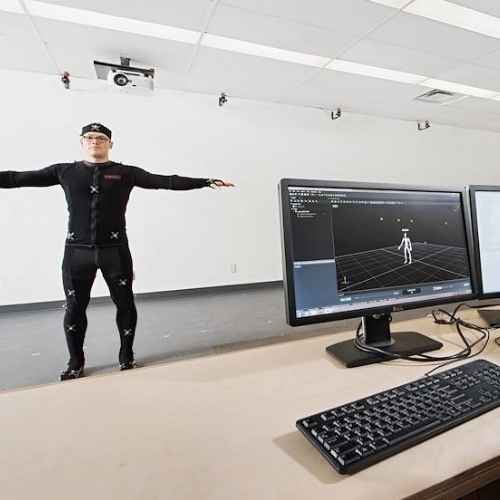
Creating a digital twin.

Trustworthy XR and digital twins

Engineering-grade immersive systems designed for accuracy, reliability and real-world deployment.

Parliament Hill in Ottawa, Canada.

Canada's bilingual XR advantage

Canada's bilingual XR advantage Immersive experiences developed in English and French to support broader accessibility, adoption and impact.

Training to use XR.

Deep domain and technology expertise

Combining expertise in XR, AI, digital twins and haptics with knowledge across healthcare, education, industry, infrastructure and human experience.

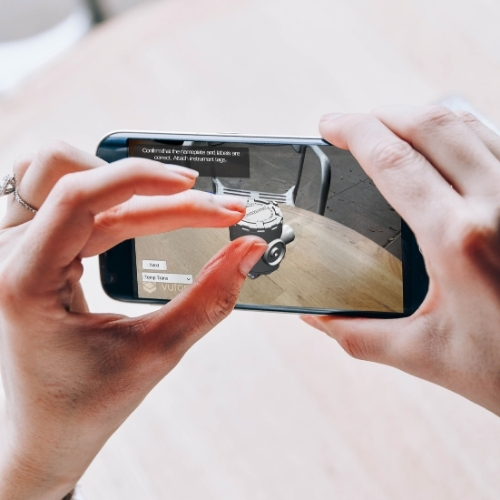
Augmented reality on a phone.

From research to real-world impact

Collaborating with partners to transform emerging technologies and research breakthroughs into practical, scalable, and deployable solutions.

Meet the Centre's director

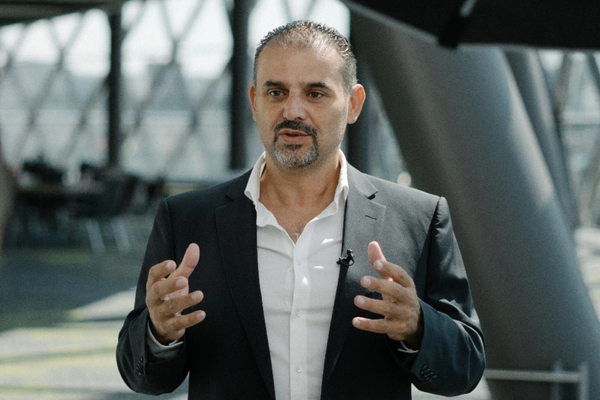
Abdulmotaleb El Saddik.
Abdulmotaleb El Saddik

Abdulmotaleb El Saddik holds the University Research Chair on Multimedia and Communications and is internationally recognized for his contributions to extended reality, haptics, digital twins and artificial intelligence. Over the past three decades, he has led pioneering research collaborations with industry, government and academic partners worldwide, advancing immersive technologies that connect the physical and digital worlds. He is a Fellow of the Royal Society of Canada, the Canadian Academy of Engineering, the Engineering Institute of Canada and the IEEE.

Why partner with us?

Engage directly with leading researchers in XR, digital twins, artificial intelligence, haptics and spatial computing.

Access advanced immersive infrastructure, including the INNOVA 360° immersive cylinder and advanced XR development environments.

Co-develop scalable immersive solutions for learning, training, healthcare, industry and infrastructure.

Leverage a multidisciplinary, bilingual network capable of moving ideas from concept to deployment.

Help shape the next generation of highly qualified talent in immersive technologies and digital engineering.

Contact us

Centre for Extended Reality

Honours students and volunteers

Interested in an honours project, capstone, internship or volunteer opportunity? We welcome students who are eager to explore XR, digital twins, AI and immersive technologies. Browse our research areas and email us to learn how you can contribute to ongoing projects or develop your own ideas with our team.