

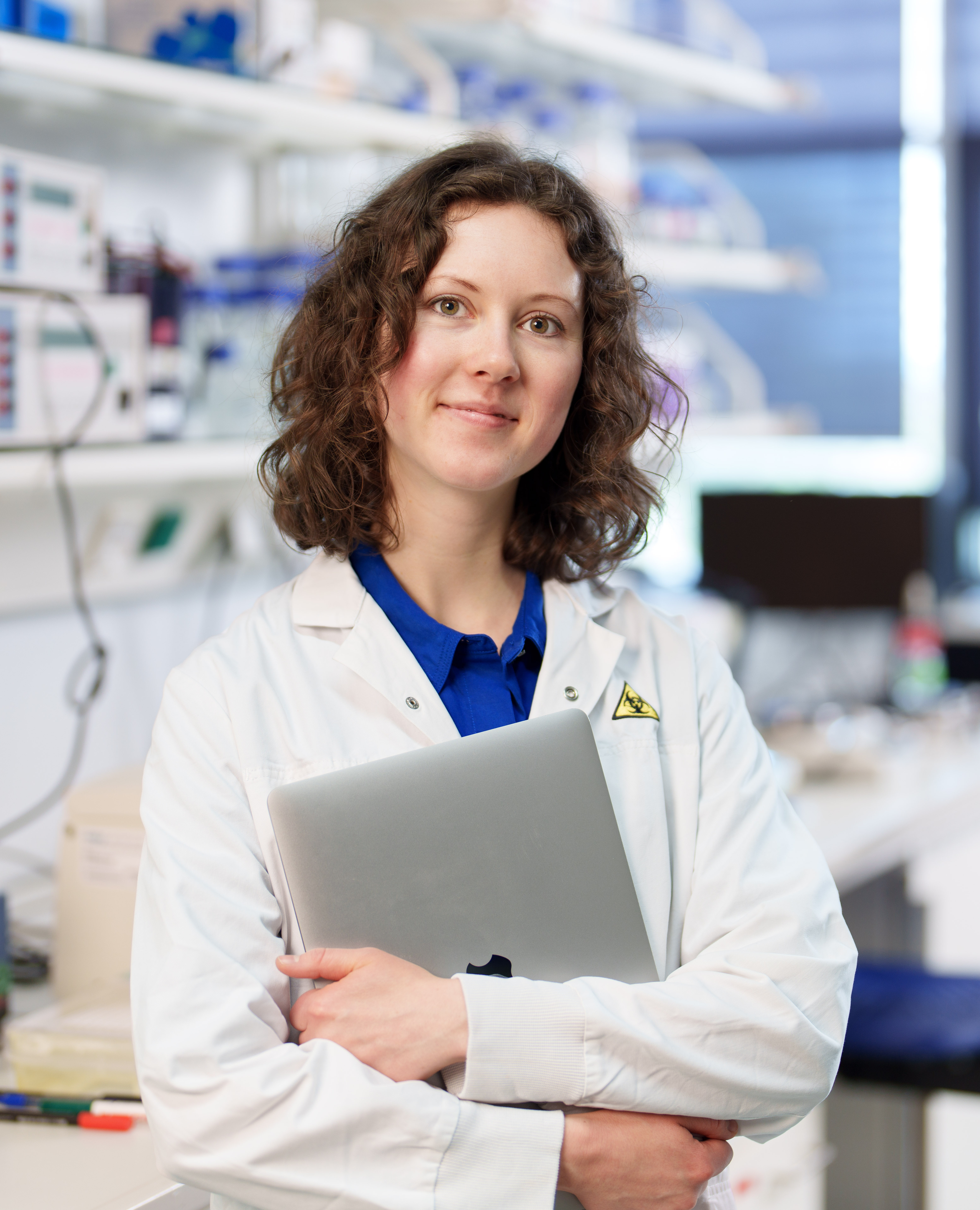
Kelsey Huus
Kelsey Huus
Assistant professor

2020: PhD, Microbiology and immunology, University of British Columbia
2015: BSc, Cellular and molecular biology, University of Ottawa


Biography

Kelsey Huus is an assistant professor specializing in gut microbiology at the School of Nutrition Sciences, Faculty of Health Sciences, University of Ottawa. She has also been nominated for a Tier 2 Canada Research Chair and is a member of the Brain-Heart Interconnectome research cluster.

Professor Huus began her research journey here at the University of Ottawa, publishing her first research paper on pathogen immune evasion as a BSc Honours student. She then obtained a PhD in microbiology and immunology from the University of British Columbia, working on the role of microbiome-immune interactions in child undernutrition. As a post-doctoral fellow, Professor Huus joined the Max Planck Institute for Biology, Germany, where she established and led the µHEAT study on diet-microbiome interactions in human vaccine responses.

Professor Huus’s work has been recognized by a number of awards, including the Faculty of Science Gold Medal for Highest Standing, a Vanier Scholarship and an EMBO Fellowship. Her new lab opens in July 2026. 

Professor Huus is accepting new students for thesis supervision. 

Research interests

  • Gut microbiome
  • Diet-microbe interactions
  • Microbe-immune interactions
  • Industrialized diets and ultra-processed foods
  • Human vaccine responses
  • Chronic inflammatory diseases
  • Gut-heart-brain axis 

Research

The Huus Lab is interested in the impact of diet and the gut microbiome on human immune health. Its goal is to combine human cohort studies, multiomic approaches and experimental microbiology to understand how diet-microbiome interactions affect host immune responses, particularly in the contexts of vaccination and chronic inflammatory diseases.

Professor Huus’s prior work suggests that industrialized diets and ultra-processed foods can increase the risk of vaccine side effects, such as fever, via modulation of a diet-microbiome-immune axis. Future work in the lab aims to mechanistically define the impact of nutrition on microbial activity and immunogenicity. The lab also aims to uncover how these diet-microbiome interactions influence variation in human immune responses, with a focus on vaccine adverse events, vaccine efficacy and the development of chronic inflammatory diseases. Ultimately, a better understanding of the diet-microbiome-immune axis could yield interventions to improve human health.

Learn more about Kelsey Huus’ research.

Publications

See Kelsey Huus publications on Google Scholar or PubMed.