

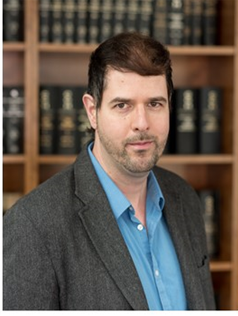
Biography
Dr. David Sabatino was born and raised in Montreal, Quebec Canada where he completed his B.Sc. (2002) and Ph.D. (2007) at McGill University in nucleic acid biochemistry. As a research fellow, he completed his post-doctoral training at l’Universitéde Montréal in 2010 developing new methods in the chemical synthesis of peptide mimics.
Dr. Sabatino was then appointed faculty in the Department of Chemistry and Biochemistry at Seton Hall University. He also held a joint faculty appointment in the Department of Medical Sciences at the Hackensack-Meridian School of Medicine where he engaged in multiple biomedical research collaborations. Dr. Sabatino joined the faculty at Carleton University in 2022 as Associate Professor in the Department of Chemistry and Institute of Biochemistry.
Dr. Sabatino has mentored over 70 students in his research laboratories spanning Seton Hall and Carleton Universities. This includes supervising undergraduate (36), graduate (7 MSc and 12 PhD) students to their terminal degrees, while co-supervising post-docs (3) in biomedical research collaborations. Dr. Sabatino’s research interests span the areas of nucleic acid, peptide and protein chemical biology. Dr. Sabatino’s research aims to explore the influence of structural modifications on the anti-cancer activity of biological molecules for drug discovery applications. Dr. Sabatino is co-author of more than 40 peer-reviewed scientific publications, conference proceedings, patents and a book chapter. Dr. Sabatino has also co-authored more than 70 conference presentations in regional, national and international meetings. Dr. Sabatino has also received funding support from the federal governments (NIH/NCI, NSERC and CFI) of the USA and Canada for research on the development of anti-cancer treatment strategies. His research accomplishments have been recognized and awarded, being nominated Researcher of the Year in 2019 at Seton Hall University.
Translational Molecular Medicine at the Interface of Chemistry & Biology
Abstract: Modern technological innovations at the interface of chemistry and biology have led to significant advancements in translational medical research. This interdisciplinary, collaborative approach has enabled the modular design and development of precision nanomedicines for the diagnosis and treatment of various diseases, including cancer.
In this presentation Dr. Sabatino will highlight his cutting-edge chemical biology teaching and research program in translational molecular medicine that engages faculty, students, and leading scientists across disciplines, divisions and institutions.
For more information about his research visit the Sabatino Lab website and contact Dr. Sabatino at: [email protected]