
Eddie Goldenberg Research Chair of Canada in Applied Isotope Science

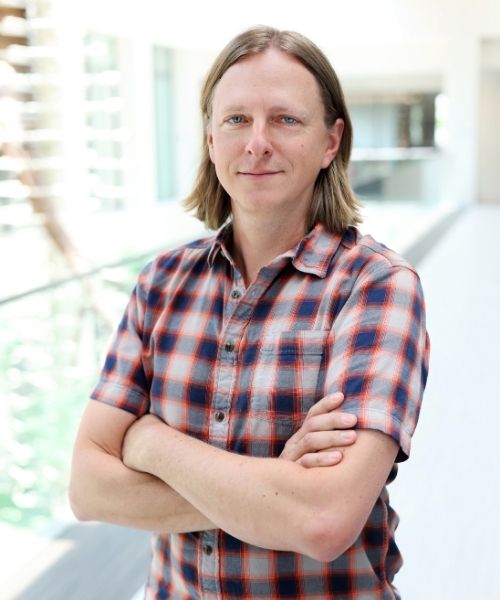
Gabriel Bowen
Gabriel Bowen
Professor, Department of Earth and Environmental Sciences, Faculty of Science, uOttawa

PhD, Earth Science, University of California, Santa Cruz (2003)
BSc, Geology, University of Michigan (1999)


About the research program

Government of Canada priority area: Environment, climate resilience and the Arctic

Every material on Earth carries a natural chemical signature, called an isotope, which reveals where it came from and how it has moved through air, water, land and living things. Professor Bowen's research uses these signatures as a forensic tool to answer pressing environmental and societal questions.

His work addresses three connected challenges. First, he seeks to understand how Earth’s climate and environment have changed in the past, including shifts in atmospheric CO₂ and the frequency of wildfires, to better predict what lies ahead. Second, he tracks how various types of fresh water, ranging from snowmelt to city wastewater, through the environment today, particularly in cold regions like much of Canada. Third, he uses isotopes to trace the true origin of people, products and materials in order to support both human identification efforts and the fight against fraud in supply chains.

This work matters to Canada because of the rapid warming of the country’s Arctic regions, its dependence on healthy freshwater systems, and its need for secure, verifiable supply chains, from food exports to critical resources. Governments, industries and communities can use isotope-based tools, founded on accessible real-world science, to find the evidence they need to monitor environmental change, manage water resources, and protect against fraud.

At the University of Ottawa, Professor Bowen is establishing a national hub that will bring together isotope researchers, government agencies and industry partners. This hub will also have access to uOttawa’s world-class research facilities, including the André E. Lalonde Accelerator Mass Spectrometry Laboratory and the Ján Veizer Stable Isotope Laboratory. The program aims to create new partnership opportunities with federal departments, such as Environment and Climate Change Canada and Natural Resources Canada, as well as with Canadian companies and international collaborators already working with Bowen on projects ranging from Arctic water monitoring to combating illegal timber harvesting in the Amazon.

Biography

Gabriel Bowen holds an undergraduate degree in geology from the University of Michigan (1999) and a PhD in Earth Science from the University of California, Santa Cruz (2003). After completing a postdoctoral fellowship at the University of Utah, he held faculty positions at Purdue University before returning to the University of Utah in 2012, where he most recently served as professor and chair of the Department of Geology and Geophysics.

Professor Bowen’s areas of expertise span isotope geochemistry, geospatial science, and statistical and data science. He is widely credited as being the founder of isoscape science, a field that combines isotope data with geospatial modelling to trace the origin and movement of water, wildlife and human-made materials, a term that now appears in more than 16,000 published works.

His major achievements include developing the first large-scale databases of human tissue isotope composition, now used to support forensic identification by U.S. Customs and Border Protection and the U.S. Department of Defense, and producing foundational research on ancient climate change that continues to shape how scientists understand long-term carbon cycle stability.

He has published more than 220 peer-reviewed articles, has been cited over 22,500 times, and has secured more than $16M in research funding. He received the Macelwane Medal from the American Geophysical Union and is a fellow of the AGU, the Geological Society of America, the Kavli Frontiers of Science program, the Geochemical Society and the European Association for Geochemistry.

He has led major U.S. National Science Foundation research coordination networks and founded the SPATIAL summer course, training more than 200 early-career scientists worldwide.

Selected accomplishments

  • Macelwane Medal, American Geophysical Union (2012)
  • Fellow, American Geophysical Union, Geological Society of America, Kavli Frontiers of Science, Geochemical Society and European Association for Geochemistry
  • University of Utah Distinguished Research Award (2024)