
Chinese and Japanese are the languages of two of the world’s largest economies, while Chinese represents the world’s largest linguistic community. Courses are designed to provide a comprehensive understanding of Asia’s multi-faceted role in the contemporary world and its historical and cultural transformations.

Asian Studies
Program overview
DURATION
LOCATION
LANGUAGE
OPTIONS
Why choose this program

Enhanced Asian Skills: The Asian Studies minor offers you comprehensive training in various communication skills, such as reading, writing, listening, and speaking. Some more specialized courses focus on Chinese or Japanese culture and language.
Interactive Learning Environment: Take part in social and cultural activities or even abroad in East Asian countries.
Learning Support: Benefit from innovative and engaging resources such as specialized teaching tools, oral expression and conversation workshops, and AI‑based language‑learning technologies.
Program structure
Browse program options
Opportunity to acquire a solid foundation while following a Specialization or a Major in another discipline.
Must be taken in addition to a main program.
Admission requirements and deadlines for Asian Studies
After your studies

After completing your undergraduate studies in your specialization or major (for example, a major in World Languages and Cultures) with a minor in Asian Studies, you have two main paths to consider: continuing your studies or entering the workforce.
You may choose to pursue graduate studies in your main program, such as a Master’s degree (MA), to deepen your knowledge and develop advanced research, analytical, and critical‑thinking skills.
You may also decide to enter the job market directly. Your degree can lead to a variety of careers in fields such as Interpreter, Translator, Language school manager, Ambassador, Diplomat, Intergovernmental affairs officer, Immigration policy analyst, Communications specialist. These opportunities allow you to apply your skills in writing, speaking and Interpersonal communication in real-world settings.
Whether you choose to continue your studies or transition into the workforce, your degree provides a strong foundation for building a career.
Tuitions and fees
Student experience
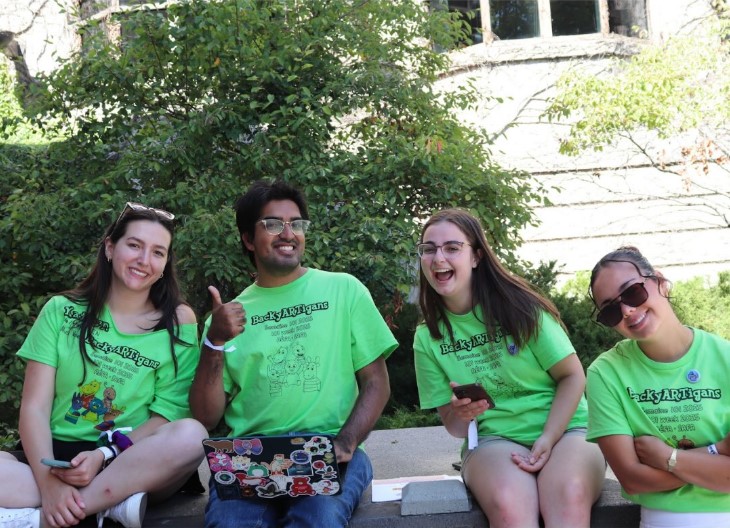
Student Association of the Faculty of Arts (SAFA)
SAFA represents the interests of undergraduate students of the Faculty of Arts within the UOSU, the Faculty, the University, the community, and the provincial and federal governments. The students’ association also works to foster a sense of community through social, academic, and cultural events, while at the same time offering a variety of services to its members.

University of Ottawa Korean Student Association (UOKSA)
The University of Ottawa Korean Student Association (UOKSA) is a non-profit cultural club. Our goal is to promote Korean culture on campus. UOKSA provides a space for students with Korean heritage and others to celebrate and learn more about Korean culture.

Graduate Students' Association (GSAMLL)
The GSAMLL is a member of the larger Graduate Students Association of University of Ottawa. Our mandate is to enhance environment in which our members pursue their collective academic interests.
Need help?

Contact us
Question about this program? We are here to help!

Meet our student recruitment officer
Does the transition to university seem a bit intimidating?
Book an appointment with our student recruitment officer