

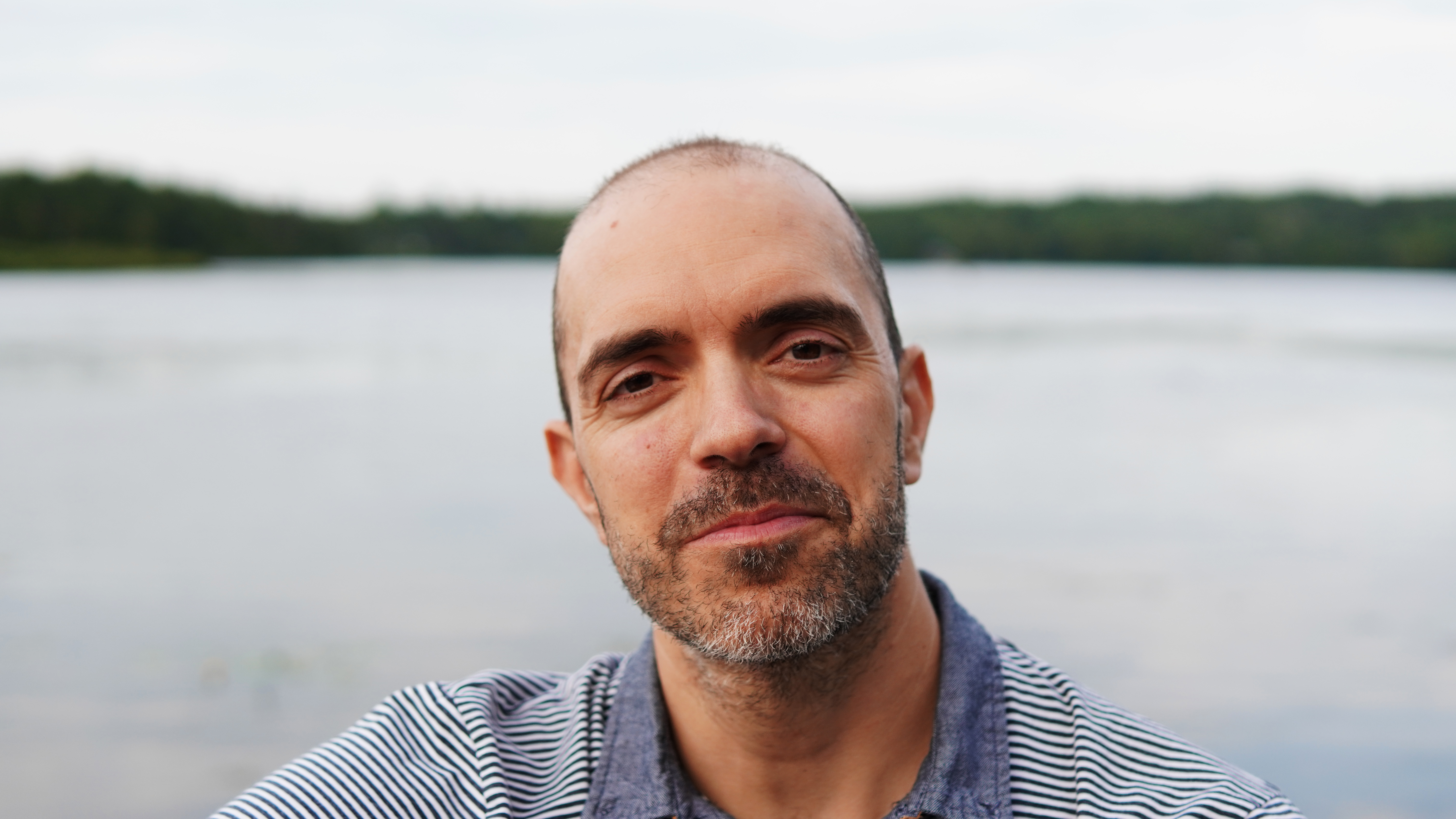
Biography
Carl Laflamme investigates the cell biology of neurodegenerative diseases, with a particular focus on amyotrophic lateral sclerosis (ALS). Most proteins associated with neurodegenerative diseases remain part of the “dark genome” — understudied proteins for which high-quality research tools are lacking — limiting our understanding of disease mechanisms and the development of new diagnostics and therapies. His laboratory seeks to illuminate this “dark genome” by collaborating with industry partners developing next-generation affinity reagents, while independently assessing their selectivity and performance in cellular models. As an investigator within the Structural Genomics Consortium (SGC) and leader of the uOttawa YCharOS site, he collaborates with academic, industry and non-profit partners in an open-science framework to improve the reproducibility of biomedical research by developing, characterizing and applying high-quality research tools, advancing our understanding of the molecular mechanisms underlying neurodegenerative diseases, and accelerating the discovery of diagnostic biomarkers and therapeutic targets.
Expertise
- Neurodegenerative diseases, with a focus on amyotrophic lateral sclerosis (ALS)
- Development and characterization of high-quality affinity reagents for biomedical research
- Cell biology and functional characterization of understudied (“dark genome”) proteins
- Biomarker discovery and characterization using cellular and molecular approaches
- Open science, research reproducibility and public-private partnerships in biomedical research
Research Projects
Our research program investigates the molecular mechanisms underlying neurodegenerative diseases, with a particular focus on amyotrophic lateral sclerosis (ALS), a devastating motor neuron disease for which the molecular mechanisms remain incompletely understood. Advances in human genetics continue to identify genes associated with neurodegenerative diseases; however, many of the proteins they encode remain part of the “dark genome” because high-quality research tools are lacking. Our laboratory develops, independently characterizes and applies these tools to uncover protein function using CRISPR-engineered cell lines and iPSC-derived neuronal and glial models. Building on our recent eLife resource describing the first systematic characterization of affinity reagents targeting ALS-associated proteins, we are investigating a subgroup of ALS genes implicated in immune and neuroinflammatory pathways to better understand their contribution to disease pathogenesis.
As part of the Structural Genomics Consortium (SGC), we collaborate with academic, industry and non-profit partners to accelerate the development of open-science research tools for understudied proteins. Within this open-science ecosystem, our laboratory hosts the uOttawa YCharOS site. YCharOS (Antibody Characterization through Open Science) is an international, public-good initiative dedicated to the independent characterization of commercially available and emerging affinity reagents. Under the leadership of Dr. Riham Ayoubi, Scientific Director of YCharOS-uOttawa, the platform is fully integrated into our research and trainee development, providing students and staff with hands-on experience in rigorous reagent characterization and open-science practices. Through collaborations with industry partners, we are also expanding beyond conventional antibodies to include AI-designed mini binders, enabling the development of next-generation, epitope-specific affinity reagents.
Our laboratory is committed to improving the reproducibility of biomedical research through the independent characterization of affinity reagents, the development of open standards, and collaborations with international initiatives such as Only Good Antibodies (OGA) at the University of Leicester. Reagent characterization data, protocols and associated resources are openly disseminated through Zenodo and the YCharOS Gateway on F1000Research, enabling researchers worldwide to identify fit-for-purpose affinity reagents through openly accessible datasets and peer-reviewed characterization studies. Together, these efforts advance our understanding of disease mechanisms, support the discovery of diagnostic biomarkers and therapeutic targets, and improve the reproducibility of biomedical research.
We are currently recruiting an MSc or PhD student through the Clinical Science and Translational Medicine program, Pharmaceutical Sciences concentration.
Amyotrophic lateral sclerosis (ALS) is a neurodegenerative disease characterized by the progressive loss of motor neurons. We study understudied ALS-associated proteins and have identified several targets enriched in microglia, the immune cells of the central nervous system. This project aims to uncover how these proteins are regulated by immune pathways and how they may contribute to ALS. The selected trainee will have the opportunity to apply for Mitacs funding.
Awards and Distinctions
- 2025 — NC3Rs International 3Rs Prize (co-recipient) for advancing the replacement of animal-derived antibodies through recombinant affinity reagents
- 2025 — CiteAb Award for Significant Individual Impact, recognizing contributions to improving the quality and reproducibility of biomedical research
- 2025 — CiteAb Educational Resource of the Year Award (YCharOS), recognizing YCharOS as an outstanding open-science resource for the life sciences
- 2023 — AIMOS Commendation Award for Open Science, recognizing international contributions to open and reproducible science
- 2021 — International Neuro-Irv and Helga Cooper Foundation Open Science Award (co-recipient), supporting international leadership in open-science initiatives
Media
- 2026 — Featured in a Nature News about the antibody liability crisis
- 2025 — Featured in four blogs published by YCharOS industry partners (Cell Signaling Technology, Abcam) highlighting the initiative and his leadership role
- 2024 — A News Feature in Nature by Diana Kwon explores efforts to tackle antibody reliability issues. YCharOS is highlighted as a key initiative, its achievements to date (including our studies in eLife), and its future goals
- 2024 — An article in The Transmitter discussing the role of YCharOS in neuroscience
Publications
Selected peer-reviewed publications and preprints
- Ayoubi, R., MacDougall, E. J., McDowell, I., Dorion, M. F., Ross, J. P., González Bolívar, S., Ruiz Moleón, V., Alende, C., Fotouhi, M., Chaineau, M., Chen, C., Piscopo, P., Soubannier, V., Maussion, G., Rocha, C., Keates, T., Marsden, B. D., Koukouflis, L., Lee, W., Wigren, E., Marks, C., Healy, L. M., Dion, P. A., Rouleau, G. A., Fon, E. A., Gräslund, S., Gileadi, O., Edwards, A. M., Durcan, T. M., McPherson, P. S., Laflamme, C. (2026). Cell type specific analysis of ALS associated proteins reveals immune-regulated targets. eLife. https://doi.org/10.7554/eLife.111349.1
- Ayoubi, R., Ryan, J., Gonzalez Bolivar, S., Alende, C., Ruiz Moleon, V., Fotouhi, M., Alqazzaz, M., Southern, K., Alshafie, W., Baker, M. R., Ball, A. R., Jr., Callahan, D., Cooper, J. A., Crosby, K., Harvey, K. J., Houston, D. W., Kumaran, R., Rego, M., Schofield, C., … Laflamme, C. (2024). A consensus platform for antibody characterization. Nature Protocols. https://doi.org/10.1038/s41596-024-01095-8
- Kahn, R. A., Virk, H., Laflamme, C., Houston, D. W., Polinski, N. K., Meijers, R., Levey, A. I., Saper, C. B., Errington, T. M., Turn, R. E., Bandrowski, A., Trimmer, J. S., Rego, M., Freedman, L. P., Ferrara, F., Bradbury, A. R. M., Cable, H., & Longworth, S. (2024). Antibody characterization is critical to enhance reproducibility in biomedical research. eLife, 13. https://doi.org/10.7554/eLife.100211
- Biddle, M., Stylianou, P., Rekas, M., Wright, A., Sousa, J., Ruddy, D., Stefana, M. I., Kmiecik, K., Bandrowski, A., Kahn, R. A., Laflamme, C., Krockow, E. M., & Virk, H. S. (2024). Improving the integrity and reproducibility of research that uses antibodies: a technical, data sharing, behavioral and policy challenge. MAbs, 16(1), 2323706. https://doi.org/10.1080/19420862.2024.2323706
- Doolen, S., Ayoubi, R., Laflamme, C., Betarbet, R., Zoeller, E., Williams, S. G., Fu, H., Levey, A. I., & Sukoff Rizzo, S. J. (2023). Validation and in vivo characterization of research antibodies for Moesin, CD44, Midkine, and sFRP-1. F1000Research, 12, 1070. https://doi.org/10.12688/f1000research.138354.2
- Ayoubi, R., Ryan, J., Biddle, M. S., Alshafie, W., Fotouhi, M., Bolivar, S. G., Ruiz Moleon, V., Eckmann, P., Worrall, D., McDowell, I., Southern, K., Reintsch, W., Durcan, T. M., Brown, C., Bandrowski, A., Virk, H., Edwards, A. M., McPherson, P., & Laflamme, C. (2023). Scaling of an antibody validation procedure enables quantification of antibody performance in major research applications. eLife, 12. https://doi.org/10.7554/eLife.91645
- Laflamme, C., Edwards, A. M., Bandrowski, A. E., & McPherson, P. S. (2021). Opinion: Independent third-party entities as a model for validation of commercial antibodies. New Biotechnology, 65, 1-8. https://doi.org/10.1016/j.nbt.2021.07.001
- Laflamme, C., McKeever, P. M., Kumar, R., Schwartz, J., Kolahdouzan, M., Chen, C. X., You, Z., Benaliouad, F., Gileadi, O., McBride, H. M., Durcan, T. M., Edwards, A. M., Healy, L. M., Robertson, J., & McPherson, P. S. (2019). Implementation of an antibody characterization procedure and application to the major ALS/FTD disease gene C9ORF72. eLife, 8. https://doi.org/10.7554/eLife.48363
- Laflamme, C., Galan, J. A., Ben El Kadhi, K., Meant, A., Zeledon, C., Carreno, S., Roux, P. P., & Emery, G. (2017). Proteomics screen identifies class I Rab11 family interacting proteins as key regulators of cytokinesis. Molecular and Cellular Biology, 37(3). https://doi.org/10.1128/MCB.00278-16
- Laflamme, C., & Emery, G. (2015). In vitro and in vivo characterization of the Rab11-GAP activity of Drosophila Evi5. Methods in Molecular Biology, 1298, 187-194. https://doi.org/10.1007/978-1-4939-2569-8_16
- Ramel, D., Wang, X., Laflamme, C., Montell, D. J., & Emery, G. (2013). Rab11 regulates cell-cell communication during collective cell movements. Nature Cell Biology, 15(3), 317-324. https://doi.org/10.1038/ncb2681
- Laflamme, C., Assaker, G., Ramel, D., Dorn, J. F., She, D., Maddox, P. S., & Emery, G. (2012). Evi5 promotes collective cell migration through its Rab-GAP activity. Journal of Cell Biology, 198(1), 57-67. https://doi.org/10.1083/jcb.201112114
- Annabi, B., Doumit, J., Plouffe, K., Laflamme, C., Lord-Dufour, S., & Beliveau, R. (2010). Members of the low-density lipoprotein receptor-related proteins provide a differential molecular signature between parental and CD133+ DAOY medulloblastoma cells. Molecular Carcinogenesis, 49(7), 710-717. https://doi.org/10.1002/mc.20645
- Annabi, B.*, Laflamme, C.*, Sina, A., Lachambre, M. P., & Beliveau, R. (2009). A MT1-MMP/NF-kappaB signaling axis as a checkpoint controller of COX-2 expression in CD133+ U87 glioblastoma cells. Journal of Neuroinflammation, 6, 8. https://doi.org/10.1186/1742-2094-6-8
Open repositories
- 182 YCharOS antibody characterization reports openly shared via Zenodo, with Carl Laflamme as corresponding author on each
- A collection of 53 antibody characterization articles published on the F1000Research platform, 41 of which are peer-reviewed and indexed in PubMed