

Pierre Gilles Bélanger
Biography
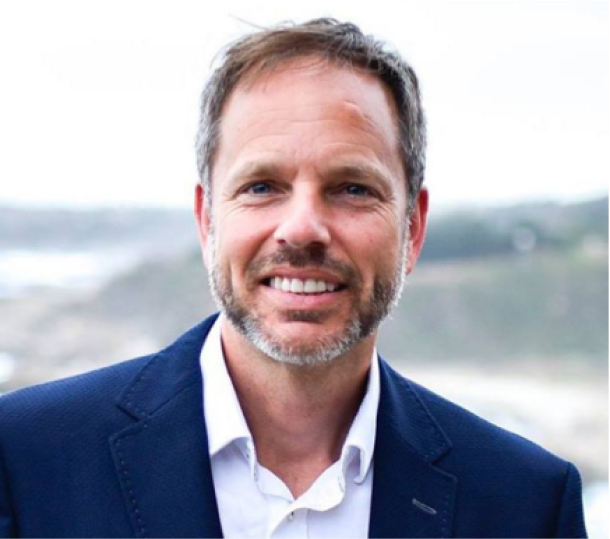
Professor Pierre-Gilles Bélanger has been a member of the Barreau du Québec since 1988 and is a specialist in international human rights law, criminal law, comparative constitutional law, and inter-American legal cooperation. He is an Adjunct Professor at the Faculty of Law of the University of Ottawa, an Associate Researcher with the Human Rights Research and Education Centre (HRREC), and the founder of JusticeAméricas.org.
His career combines more than three decades of legal practice with the Department of Justice Canada and a sustained commitment to teaching, research, and judicial training throughout the Americas. Recognized for his expertise in judicial reform, democratic governance, and the protection of fundamental rights, he has participated in numerous international cooperation projects involving judicial institutions, governments, universities, and international organizations.
His work focuses primarily on judicial independence, access to justice, criminal justice reform, institutional legitimacy, human rights, and legal relations between Canada, Latin America, and the Caribbean.
Teaching
At the University of Ottawa Faculty of Law, Professor Bélanger is the founder and instructor of the course Legal and Political Orders in Latin America and Their Relations with Canada, which offers a comparative analysis of political institutions, legal systems, and contemporary governance challenges throughout the Americas.
He also teaches and contributes in areas such as:
- International human rights law;
- Judicial ethics and governance;
- Comparative criminal law;
- Cybercrime and privacy protection;
- Comparative constitutionalism;
- International negotiations;
- Discrimination, prejudice, and access to justice.
He has also served as a visiting professor and guest lecturer at several universities and judicial institutions in Chile, Mexico, and Colombia.
Research
Professor Bélanger’s research activities are grounded in a comparative and inter-American perspective. His areas of research include:
- Judicial independence and mechanisms for protecting the rule of law;
- Judicial and criminal justice reforms in Latin America;
- The relationship between democracy, public governance, and institutional legitimacy;
- Human rights and the protection of vulnerable groups;
- Ethics, privacy, and the legal profession;
- The relationship between organized crime, governance, and fundamental rights.
He is co-founder of JusticeAméricas.org, an interdisciplinary platform dedicated to research, dialogue, and professional development on democracy, the rule of law, and judicial practices in the Americas. The initiative brings together scholars, judges, public policymakers, and civil society organizations from across the hemisphere.
Professional Experience
Before devoting a greater portion of his time to academic and international activities, Professor Bélanger served as counsel with the Department of Justice Canada from 1990 to 2024. His responsibilities included extradition, international mutual legal assistance, cybercrime, privacy protection, criminal law, and public law.
He has also led or participated in numerous legal cooperation projects throughout the Americas, including initiatives with the Organization of American States (OAS), the Justice Studies Center of the Americas (JSCA), and various judicial institutions in Chile, Mexico, Colombia, and Haiti.
In 2008, he was seconded to the Justice Studies Center of the Americas (JSCA) in Santiago, Chile, as an expert on criminal justice reform and judicial system transformation.
Selected Publications
Professor Bélanger’s work has been published in French, English, and Spanish in edited volumes and scholarly journals focusing on human rights, judicial reform, international criminal law, and comparative constitutionalism. He is also a contributor to La Presse. Recent publications include:
- “Criminal Defamatory Libel: A Long History of the Rule of Law Entering the Private Sphere,” Revue générale de droit (2024);
- “El Procedimiento abreviado en el contexto de la reforma legal penal chilena,” in Justicia y legitimidad en América (2023);
- “La Constitución canadiense y sus desafíos,” in Constitución y estado de derecho: Experiencias comparadas(2021);
- “The Law of the Inter-American Court of Human Rights: A Modern Obligation for Canada” (2019).
Education
- Ph.D. in Law, University of Ottawa;
- LL.L., University of Ottawa;
- Master’s Degree in Social Sciences, University of Ottawa;
- Specialized training in criminal procedure reform and criminal justice in Mexico.
Areas of Expertise
- International human rights law;
- Comparative criminal law;
- Judicial reforms in Latin America;
- Judicial independence;
- Judicial governance;
- Cybercrime and privacy protection;
- Access to justice for vulnerable groups;
- Inter-American cooperation;
- Comparative analysis of legal and political systems.
Selected Publications
Professor Bélanger’s work has been published in French, English, and Spanish in edited volumes and scholarly journals focusing on human rights, judicial reform, international criminal law, and comparative constitutionalism. He is also a contributor to La Presse. Recent publications include:
- “Criminal Defamatory Libel: A Long History of the Rule of Law Entering the Private Sphere,” Revue générale de droit (2024);
- "El Procedimiento abreviado en el contexto de la reforma legal penal chilena" in Justicia y legitimidad en América (2023);
- "La Constitución canadiense y sus desafíos" in Constitución y estado de derecho. Experiencias comparadas (2021);
- “The Law of the Inter-American Court of Human Rights: A Modern Obligation for Canada” (2019).
Education
- Ph.D. in Law, University of Ottawa;
- LL.L., University of Ottawa;
- Master’s Degree in Social Sciences, University of Ottawa;
- Specialized training in criminal procedure reform and criminal justice in Mexico.
Areas of Expertise
- International human rights law;
- Comparative criminal law;
- Judicial reforms in Latin America;
- Judicial independence;
- Judicial governance;
- Cybercrime and privacy protection;
- Access to justice for vulnerable groups;
- Inter-American cooperation;
- Comparative analysis of legal and political systems.
Public Conferences
- Démocratie, primauté du droit et indépendance », Institut canadien d’administration de la justice, Kanata, 25-27 novembre 2025.
- La independencia judicial - Otro eje de análisis, [L’indépendance judiciaire – un autre axe d’analyse], SENADIS, Corte Suprema de Chile, Universidad Central de Chile, ¿Qué metodología debe utilizarse para analizar la independencia judicial ?, [Quelle méthodologie emprunter pour analyser l’indépendance judiciaire ?], 17 et 18 juillet 2025, en ligne : <https://v2024.ucentral.cl/noticias/fac-derecho-y-humanidades/conversatorio-internacional-reunio-a-expertos-para-debatir-sobre>.
- Le droit et le rôle du travailleur social, Conférence auprès de travailleurs sociaux au Chili, Magíster en Intervención Social y Desarrollo Humano, [Maîtrise en intervention sociale et développement humain], Universidad Central de Chile, Santiago - La Serena, 10 Mai 2025, en ligne : <https://www.linkedin.com/company/magister-en-intervención-social-y-desarrollo-humano/posts/>.
- Entre dos fuegos: Escenarios de violencia frente a la migración irregular en América Latina, [Entre deux feux : Scénarios de violence face à la migration irrégulière en Amérique latine], UNAM, Mexique, 7 novembre 2024, en ligne: <https://www.juridicas.unam.mx/actividades-academicas/3635-entre-dos-fuegos-escenarios-de-violencia-frente-a-la-migracion-irregular-en-america-latina>.
- Environmental Justice : Overview and Challenges in the Americas Region, Commission de coopération environnementale — Le processus d’évaluation environnementale dans le contexte de la justice environnementale, 5 septembre 2024, en ligne : <https://www.cec.org/es/eventos/el-proceso-seem-en-el-contexto-de-la-justicia-ambiental/>.
- Conférence sur le droit environnemental autochtone et l'indépendance du pouvoir judiciaire, Santiago, 29, 30 novembre et 1er décembre 2023, en ligne: <https://v2024.ucentral.cl/noticias/fac-derecho-y-humanidades/juez-canadiense-realiza-actividades-en-la-facdeh>.
- Academic freedom and the respect for human rights, advantages, disadvantages and challenges towards the present times, Universidad de Chile - Liberté académique au Canada : un problème plus grand de ce que l’on pense, 19 octobre 2023, en ligne : < https://derecho.uchile.cl/agenda/209958/seminario-libertad-academica-y-el-respeto-por-los-derechos-humanos> et <https://uchile.cl/noticias/211666/libertad-academica-tiene-rol-clave-en-el-desarrollo-del-pensamiento>.
- Le nouveau projet constitutionnel du Chili et la justice sociale, 25 janvier 2023, Université́ d’Ottawa, en ligne : <https://www.uottawa.ca/recherche-innovation/credp/evenements/nouvelle-constitution-chili>. (Modérateur et organisateur de la conférence).
- Modelo centanial de enseñanza para nuevos y Mejores Abogados, plataforma eja, [Modèle d'enseignement du centenaire pour les nouveaux et meilleurs avocats, plateforme EJA], UNAM, Mexico, Séminaire International d’enseignement juridique (Projet PAPIME PE300922), 6 octobre 2022.
- Système juridique politique de l'Amérique latine et ses relations avec le Canada, Radio Universidad de Chile, Derecho en el aire [Le droit en ondes], Faculté de droit de l’Université du Chili, 3 août 2022.
- Accès à la justice et légitimité dans les espaces judiciaires pour les groupes de protection spéciale, Jurivision, 9 décembre 2021, en ligne : <https://www.youtube.com/watch?v=tM2dpn_Jn1Y>.
- A transversal view on legitimacy of the Judicial reforms of Latin America, Jurivision, La legitimidad y la ilegitimidad a través los intereses de los actores, [La légitimité et l’illégitimité à travers les intérêts des acteurs], 27-28 avril 2021, en ligne: < https://www.youtube.com/watch?v=OsoNuMJ2SnI>.
- Le Chili : Un laboratoire constitutionnel, Jurivision, 13 juin 2021, en ligne : <https://jurivision.ca/le-chili-un-laboratoire-constitutionnel/>.
- L'implication de l'Université d'Ottawa au Mexique dans le domaine du droit, Confederación de Estudiantes de Posgrado e Investigadores Mexicanos en Canadá (CEIMEXCAN): Huellas mexicanas en Canadá y sus frutos,[Confédération des étudiants et chercheurs mexicains au Canada (CEIMEXCAN) : Traces mexicaines au Canada et leurs fruits], 2 novembre 2020, en ligne : <https://www.youtube.com/watch?v=tZaf7q7QFC4> entre 23:20 et 38:00.
- Séminaire international sur le droit à l'ère pandémique, Projet PAPIME, 7 octobre 2020, UNAM, Mexico, en ligne : <https://www.youtube.com/watch?feature=youtu.be&v=5CpwSysGLFs&app=desktop&fbclid=IwAR2O7iCuU4eZRGs1djPunuBTMwK8XDE5m9lrVnhshl5VoX0tm-RNRW5shL0>.
- Le Chili – un laboratoire pour une nouvelle démocratie ? Centre des études interaméricaines, Université Laval, Québec, le 12 mars 2020, en ligne : <https://www.eti.ulaval.ca/evenements/le-chili-un-laboratoire-pour-une-nouvelle-democratie-cei>.
Relevant international experience
- 33 years at the Department of Justice Canada, focused on coordination, inter-American cooperation, and the training of magistrates.
- Trainer in international human rights law and judicial governance in Mexico, Chile, and Hait.
- Organization of seminars bringing together presidents of judicial branches in Mexico, justices of the Supreme Court of Chile, and the Chief Justice of Canada..
- Development and leadership of interinstitutional academic and judicial networks across the Americas.
- Expertise in participatory research methodologies, intercultural dialogue, and institutional strengthening.