
Department of Chemical and Biological Engineering

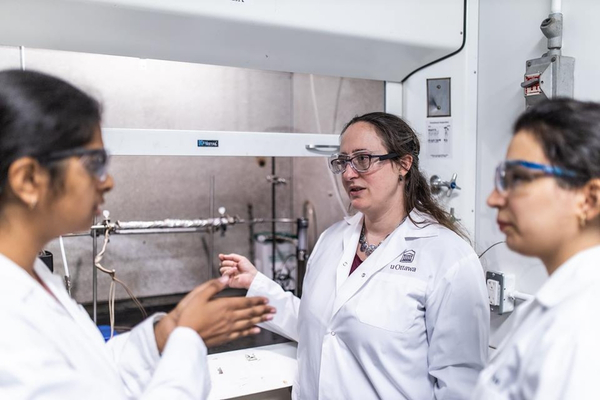
Students in chemical engineering lab.
The Department of Chemical and Biological Engineering is characterized by its dynamic and innovative approach to both engineering education and research.

Where engineering meets biology, chemistry and innovation

The Department of Chemical and Biological Engineering centres around turning scientific discoveries into practical solutions that improve lives and shape a more sustainable future. Our programs combine engineering principles with chemistry, biology and biotechnology to prepare students address complex challenges in health care, clean energy, advanced manufacturing, sustainability, circular economy and more.

Our mission is to generate and disseminate knowledge to meet the ever-changing needs of society and particularly to prepare students to practise their chosen profession in an increasingly competitive global market.

As part of the largest French-English bilingual university in the world, we play a unique role in serving both Anglophone and Francophone students from across Canada. We seek to maintain high quality, broad-based programs that equip our students with a solid foundation in the fundamentals of chemical engineering.  

Our students graduate with strong problem-solving skills, a commitment to professionalism and ethical practice, an appreciation for health, safety and environmental issues and effective communication, teamwork and interpersonal skills. They develop a desire for life-long learning as well as the ability to pursue it, along with the flexibility to adapt to an ever-changing workplace.

Department of Chemical and Biological Engineering at a glance

400+

undergraduate students

60+

graduate students

20

professors

Xudong Cao.

Word from the chair: Xudong Cao

We believe chemical engineering is a discipline for the future, that it can transform scientific discoveries and emerging technologies into solutions for the challenges facing society. Working in areas ranging from climate change, sustainable energy, and resource security to global health, environmental protection, and advanced materials, chemical engineers connect science, engineering and innovation to create make a meaningful difference.
Our department is committed to excellence in education and research by fostering interdisciplinary collaboration, creativity and entrepreneurship. We empower our students to think beyond traditional boundaries, embrace emerging technologies and develop solutions to complex challenges. Together, our professors, students, staff, alumni and partners are shaping the future of chemical engineering and preparing the next generation of engineers to create a more sustainable, healthy and resilient world.
I look forward to meeting you on campus and to sharing our vision for the future of chemical engineering.

Why study chemical and biological engineering at the University of Ottawa?

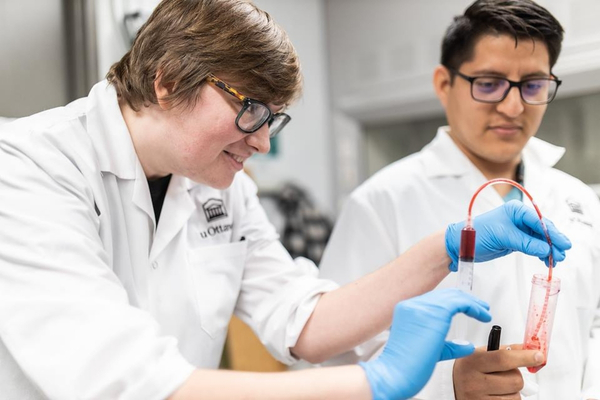
Two people in chemical and biological engineering lab.

Undergraduate and graduate programs

Chemical and biological engineering programs teach you the skills needed to design sustainable processes, develop innovative products and solve real-world challenges in health, energy, manufacturing and sustainability. Through hands-on learning, cutting-edge laboratories and industry-focused experiences, our programs combine engineering principles with chemistry and biology to prepare you for a wide range of impactful careers or advanced studies.

Our undergraduate programs are all accredited by the Canadian Engineering Accreditation Board.

Explore chemical and biological engineering programs

Three women in chemical engineering laboratory.

Research in chemical and biological engineering

From biomedical breakthroughs to clean technologies and renewable energy, our researchers and graduate students lead innovative, multidisciplinary work that addresses global challenges in areas such as health care, environment, sustainable manufacturing and circular economy.

Discover chemical and biological engineering research

STEM building on campus
Announcements

Seven new Eddie Goldenberg research chairs position uOttawa to drive innovation, resilience and prosperity across Canada

Seven globally recognized researchers based in the United States and Europe will be joining the University of Ottawa to lead new Eddie Goldenberg Rese…
Wine racks.
Agri-food

How engineering research is helping Canadian wineries adapt to a changing climate

Professor Benoît Lessard and his research group are working with Volta Estate Winery in Prince Edward County to develop faster, real-time tools for mo…
Electrical components.
Emerging materials

Semiconducting nanotubes: A master’s student’s solution for smaller, more powerful electronics

Chemical engineering student Samiha Chatoo is working on improving the electrical components in many everyday technologies using carbon nanotubes. Thi…