

Master’s and doctoral studies are intellectual journeys that demand rigor, passion, and autonomy. The Department of History is committed to providing you with world-class supervision and the resources needed to successfully complete your research project.

Prospective Students

A digital tablet with a calendar beside a keyboard

Submit Your Application 

The department’s Graduate Studies Committee reviews applications for admission to the master’s and doctoral programs in history as soon as they are complete. After considering transcripts, CVs, and letters of recommendation, committee members pay close attention to the candidates’ letters of intent. 

Student reviewing material from a textbook

The Letter of Intent: Key to Your Admission

Candidates are advised to draft their letter of intent with care. The description of the proposed historical research project must demonstrate preparatory research and serious reflection on the topic.

  • For the Master’s (1-2 pages): Outline your project, your academic preparation (courses, language skills), and the name of the professor who has agreed to supervise your research.
  • For the Doctorate (2-3 pages): Detail your project (topic, research question, historiography, sources), your preparation, and the name of the professor who has agreed to supervise you.

How to write your letter of intent. (PDF 60.71 Kb)

For more information, consult our Graduate Studies Guide (PDF 459.75 Kb)
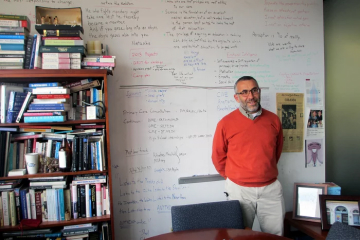
Professor standing in front of a white board next to a full bookshelf

Finding a Research Supervisor

Identifying the person who will supervise your research is mandatory. The prospective supervisor must be contacted and must have given their consent before the application is submitted.

Consult the areas of interest of our faculty.
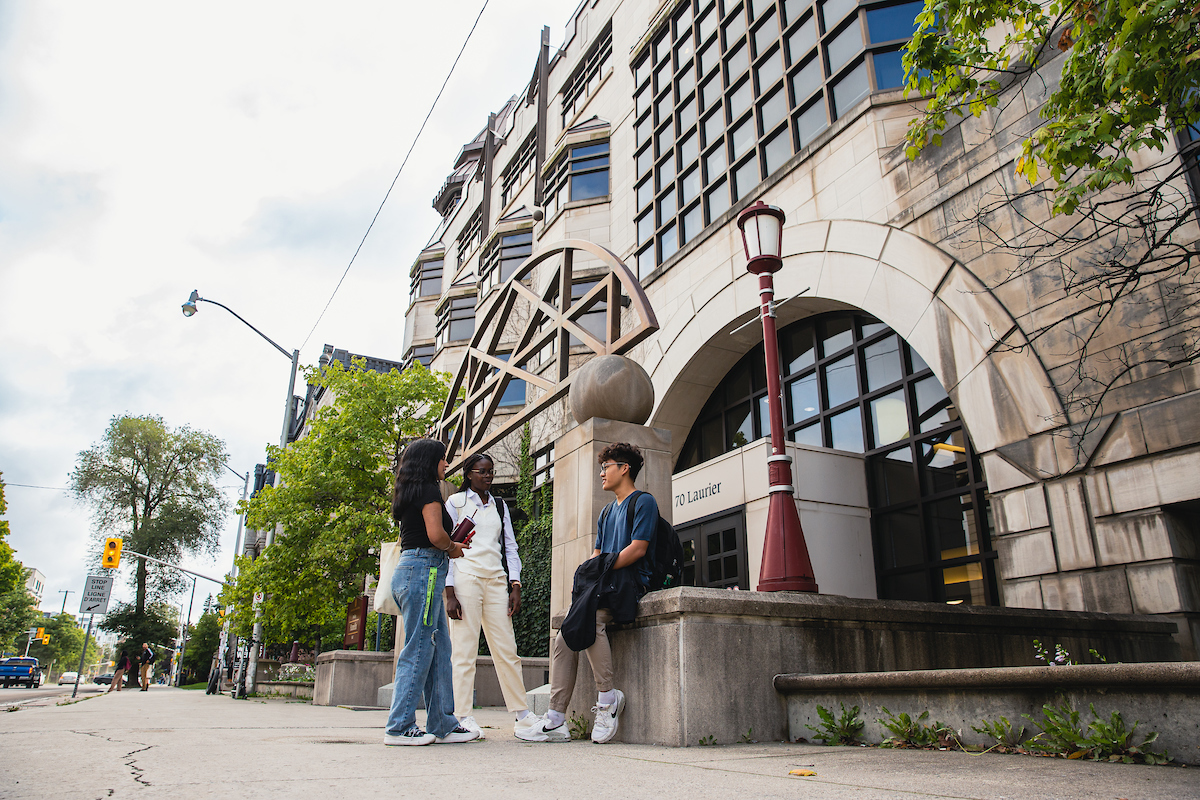
Students in front of the Faculty of Arts building

Scholarships and Funding 

Important! Admission scholarships are limited and are awarded on a competitive basis upon the recommendation of the Graduate Studies Committee at the application deadline. Candidates are therefore strongly encouraged to submit their applications early. Applications received after the deadline will be considered for admission by our committee but may not be considered for funding. For more information on scholarships and financial support opportunities, consult the Scholarships and Financial Support page.

How to Apply

Current Students

This section guides you through the key steps of your program and directs you to the resources essential for your success.
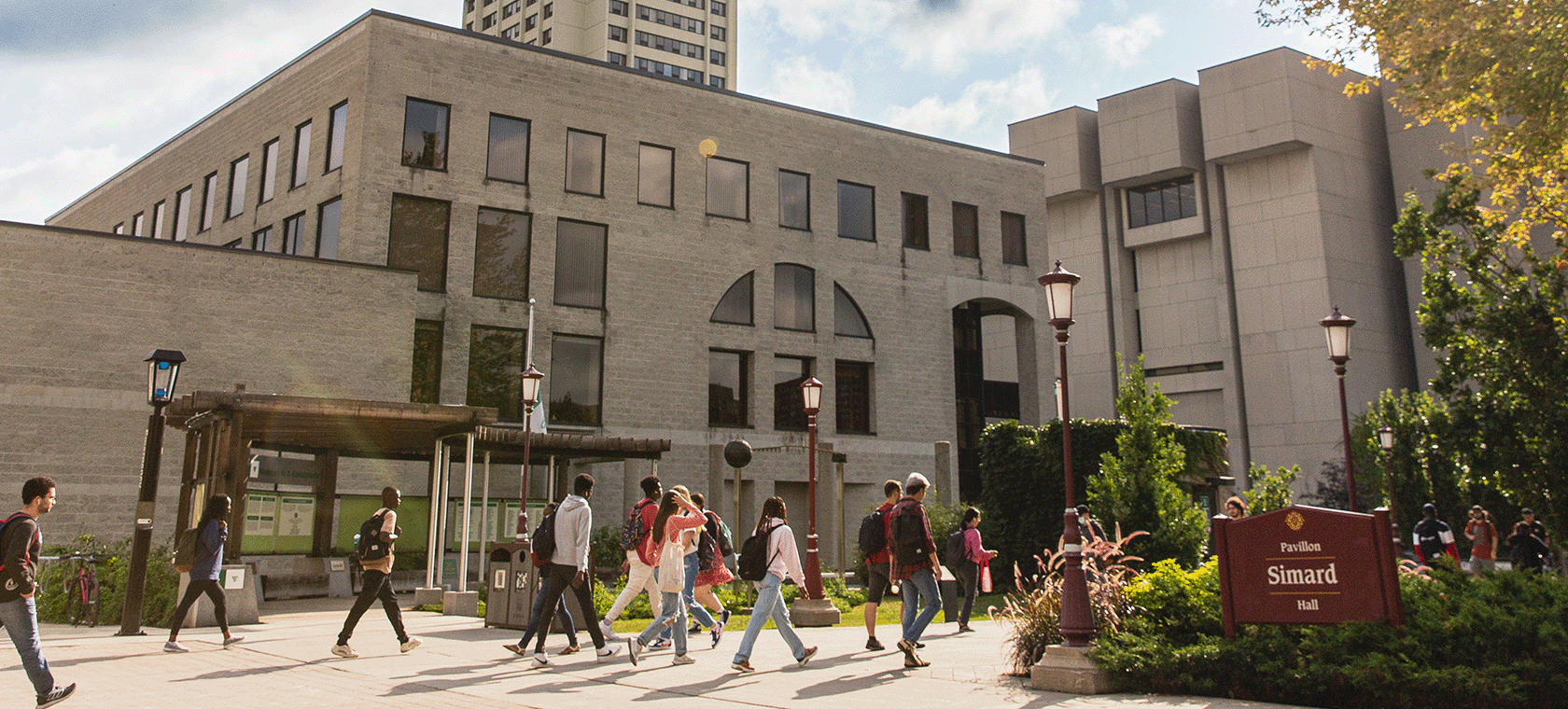
Faculty of Arts building

Your Essential Guide

The Graduate Studies Guide (PDF 620.38 Kb) is the primary reference document for your journey. It contains all the information on program progression, requirements, evaluations, deadlines, and administrative procedures. 

Students walking beside Arts building on campus

Program Progression and Key Milestones

Your program is structured around specific milestones.

  • Master’s: Seminars, thesis/research paper proposal, writing, and evaluation.
  • Doctorate: Research seminar, doctoral fields, comprehensive examination, thesis proposal, writing, and defense.

For a detailed outline of each program and its deadlines, consult the The Graduate Studies Guide (PDF 620.38 Kb).

Managing Your Studies (regulations, academic affairs, etc.)

Thesis resources (submission, evaluation, ethics). 

Special Topics Courses for the 2026-2027 Year

Course CodeCourse unitsCourse NameProfessorCourse topic
HIS 61033 unitsSeminar in American History: US Foreign Policy HistoryGallen Roger PerrasThis course studies 20th Century US foreign policy using many interpretive schools. Various subjects will be discussed, notably: Theodore Roosevelt, Woodrow Wilson, Dollar Diplomacy, Isolationism, Franklin Roosevelt & Road to War, World War Two, Atomic Diplomacy, Cold War, Korea, Cuban Missile Crisis, Vietnam, & Nixon-Kissinger Years. 
HIS 71033 unitsSeminar in European History : Central Europe and the Crisis of EuropeRoman KrakovskySince the 19th century, Europe has faced a succession of profound crises—from the rise of ideologies that fueled modern authoritarianism and the extreme violence of the two World Wars, to the questioning of the social contract since the 1970s and the illiberal turn of today. Many of these crises began in Central and Eastern Europe, where their impact was particularly intense. In this course, we will closely examine these pivotal moments to uncover the underlying dyna-mics that have shaped European societies. By analyzing how these crises emerged and evolved across different regions, you will gain a deeper understanding of their transformative effects on the continent. Explore Europe’s turbulent past and develop the skills to critically analyze contemporary challenges by examining historical crises. 
HIS 73303 unitsSeminar on Comparative History: Environmental History Daniel RückThis graduate seminar in Environmental History critically examines the reciprocal relationships between human societies and the environment across diverse temporal and geographic contexts. Emphasizing historiographical debates and methodolo-gical approaches, the course engages with key themes such as colonialism, resource extraction, environmental justice, and global ecological change. Students will analyze primary and secondary sources to explore how environmental narratives have shaped, and been shaped by, power dynamics, scientific knowledge, and cultural perceptions. The seminar fosters advanced research and discussion, preparing students to contribute original scholarship to the evolving field of environmental history. 
HIS 75033 créditsSéminaire en histoire européenne : La mémoire et la commémoration de l’Holocauste en Europe et au-delàJan GrabowskiL’Holocauste est devenu une référence universelle du mal et l’un des rares événements historiques qui suscitent l’attention et les réactions du monde entier. Malgré le temps qui passe, les discussions et les controverses autour de l’histoire et de la signification de l’Holocauste ne diminuent pas. Bien au contraire, plus nous nous éloignons chronologiquement de l’événe-ment, plus il occupe une place prépondé-rante dans le discours public.  Le séminaire examinera de près les « batailles de mémoire » qui entourent la commémoration et la compréhension de la Shoah dans certains pays européens et au Canada. 
HIS 77333 créditsSéminaire en relations internationales : Étude critique du droit dans un monde post-impérialMeredith TerrettaL’ambition du présent séminaire est de concilier à la fois une perspective juridique et de sciences sociales sur la compréhension du regard de la Critical Race Theory (CRT) et des Third World Approaches to International Law (TWAIL) quant à l’étude du Droit en langue française. La Critical Race Theory trouve son émergence dans le champ juridique étatsunien dans les années 1980. On date la naissance de la seconde génération des TWAIL au milieu des années 1990. Or, s’agissant précisément des TWAIL, il est aujourd’hui admis que ses auteurs pionniers proviennent des espaces anciennement colonisés (francophones et anglophones) ; de même, les CRT ont admis à la même période la nécessité de sortir d’une approche américano-centrée visant à étudier les hiérarchies raciales et leurs variantes, à l’échelle mondiale. Aussi, ce projet de séminaire poursuit-il un double objectif : 1) décentrer le regard habituel des travaux nord-américains consacrés à l’étude juridique comparée des discriminations raciales ; 2) identifier les généalogies intellectuelles de l’antiracisme ayant conduit à la constitution des TWAIL à partir des années 1970. 

Academic Support

Departmental Life

Strata is the arena where the new generation of historians can engage in dialogue and refine their research. By submitting to the rigorous peer-review process, you will develop the essential skills for an academic career.

Visit the Strata website and learn how to submit an article or join the team. 

For any questions about your program, funding, evaluations, or academic progress, contact the Graduate Studies Committee. 

Contact us

Department of History

Desmarais Building
55 Laurier Avenue East, 9th Floor
Ottawa ON Canada K1N 6N5
Map

Tel.: 613-562-5735
Fax: 613-562-5995
[email protected]

Office Hours

Monday to Friday
From 8:45 a.m. to 12 p.m.
From 1 p.m. to 4:30 p.m.
(June to August: closes at 3:30 p.m.)