For our monthly newsletter content submissions, please visit our dedicated Contribute to Our DFM Spotlight Form
Connecting our Community
Featured Article
Meet Elder Simon Brascoupé: Building Connections in Indigenous Health, Medical Education and Community Care
As the Faculty of Medicine's Special Advisor to the Dean on Indigenous Health, Elder Simon Brascoupé is advancing priorities related to Indigenous student support, community partnerships, cultural safety and Indigenous representation in medicine. His work focuses on strengthening relationships between Indigenous communities and the health system while creating supportive environments for Indigenous learners, patients and families.
Leading in Indigenous Health, Education and Community Engagement: Over a career spanning more than three decades, Elder Brascoupé has worked in Indigenous health, education, policy and community engagement. He previously served as CEO of a national Indigenous health organization and played a key role in establishing an Indigenous Health Committee with the College of Family Physicians of Canada, helping advance cultural safety, anti-racism education and Indigenous health competencies within Family Medicine. That commitment to increasing Indigenous representation in the health professions and supporting the next generation of Indigenous healthcare providers has also been reflected in his service on the University of Ottawa's medical school admissions committee and his teaching in Indigenous health and wellness at the university level.
While he acknowledges that institutional change takes time, Elder Brascoupé is encouraged by greater awareness of cultural safety, stronger partnerships with Indigenous communities, and more Indigenous learners entering medicine. He is optimistic about today's learners, whom he describes as more knowledgeable about Indigenous histories, cultures and health realities than previous generations.
Supporting Indigenous Learners and Communities: Among his priorities at the Faculty of Medicine are strengthening Indigenous student support and mentorship, expanding community partnerships, and supporting more Indigenous learners in pursuing careers in medicine. A focus for Elder Brascoupé is strengthening pathways for Francophone Indigenous learners through recruitment, admissions and mentorship initiatives. He points to a consortium of four Québec medical schools that has helped graduate a growing number of Indigenous physicians, highlighting a model that could help attract and support Indigenous learners within the University of Ottawa's Francophone medical program. He also advocates for community-based approaches to care and improved access to health services, particularly for First Nations, Inuit and Métis people living in rural, remote and underserved communities. Recognizing that physicians may not always be available in isolated communities, he sees value in supporting communities to take a more active role in their own health and wellness.
Creating spaces where Indigenous learners feel supported and connected is another area of focus. Elder Brascoupé highlighted the importance of establishing an Indigenous Student Lounge at the Faculty of Medicine, where learners can connect with Elders, Knowledge Keepers, mentors and peers while accessing culturally grounded supports. The space is envisioned as a place for both formal and informal mentorship, helping Indigenous learners build relationships and community throughout their medical education.
More broadly, he advocates for a holistic approach to health that recognizes the importance of community, culture, relationships and connection to the land alongside clinical care. He hopes to introduce a Medicine Walk this fall that would bring together Elders, learners and members of the Faculty of Medicine community to explore traditional medicines found on the land between the Faculty of Medicine, The Ottawa Hospital and CHEO and deepen their understanding of Indigenous knowledge and wellness practices.
Building Partnerships Through Family Medicine: Elder Brascoupé also emphasized the importance of building strong relationships with Family Medicine, which plays a central role in Indigenous communities and the delivery of health services. Through relationship-building, cultural understanding and a more holistic view of wellness, he sees opportunities to strengthen connections among learners, communities, Elders and healthcare professionals. In turn, these relationships can help advance culturally safe, community-informed care and create healthcare environments where Indigenous learners, patients and families feel seen, supported and welcomed.
To learn more about Elder Brascoupé's role and mandate at the Faculty of Medicine, read “uOttawa Faculty of Medicine names Elder Simon Brascoupé Special Advisor to the Dean on Indigenous Health.”
Explore Elder Brascoupé's journey and commitment to Indigenous health, education and community engagement in “The journey We’re All On: Elder Simon Brascoupé.”

Featured Project
Celebrating Family Medicine Leaders: Equitable Care from Local Communities to Global Partnerships
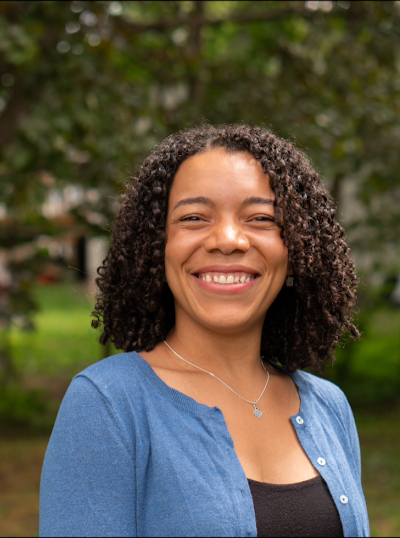
We recently had the pleasure of speaking with Dr. Lissa Bair, Lecturer and Global Health Director and co-organizer of the Faculty of Medicine’s international elective in Benin. Through her work, alongside Dr. Charlotte Roy, Lecturer and Family Physician, Dr. Bair contributes to a longstanding collaboration between the Faculty of Medicine and its partners at Université d’Abomey-Calavi (UAC) and the Institut Régional de Santé Publique (IRSP) in Benin, an important partnership that has grown steadily for more than 20 years,
Established in 2003 through the Faculty of Medicine’s Affaires Francophones office, the initiative was built on the dedication of a committed group of physicians at Montfort and has since developed into a comprehensive global health collaboration.Today, the program offers group global health electives that provide medical students and residents with the opportunities to engage with core global health principles, including community engagement, social accountability, and exposure to healthcare delivery in resource-limited settings. Each year, learners participate in a four-week elective in Benin, beginning with hospital-based observerships in Cotonou, where they gain exposure to conditions less commonly seen in Canada, such as malaria and sickle cell disease, while witnessing the clinical expertise of local physicians working with limited resources.
The elective includes a week in a long-standing partner village, where learners support a supervised community clinic alongside local healthcare professionals.
As Dr. Bair shared, one of the most meaningful developments in recent years has been the program’s evolution into a truly reciprocal partnership. With the launch of the CEReSA Project in Benin as part of the Canadian International Development Scholarships (BCDI 2030), the Faculty of Medicine now welcomes medical trainees and healthcare professionals from Benin to Canada. This bilateral exchange reflects a modern approach to global health, grounded in collaboration, mutual learning and sustainable capacity building.
“It feels very much like a partnership. Our colleagues are also now coming here and so it feels very bilateral. This is exciting and in line with global health objectives.”
For the future, Dr. Bair and Dr. Roy hope to further develop the elective in collaboration with the Faculté des sciences de la santé, and encourage more shared activities with our learners and béninois médical students and residents. They also acknowledge the work behind the BCDI project and look forward to the continuation of this important initiative.