

Fresh produce

Food Security Strategy

uOttawa's new food security strategy brings partners throughout the University community together to strengthen existing programs and improve access to food support.

Food security: A collaborative effort

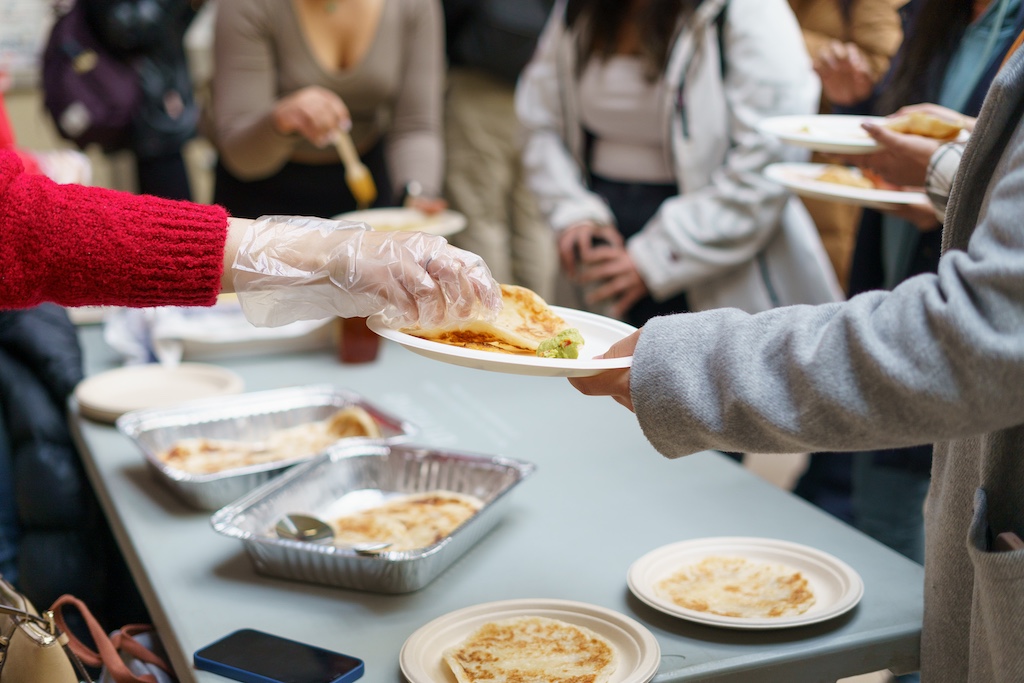
Food distribution event

Through this cross-campus collaboration, students will be able to access more free food hampers, hot meals and fresh produce bags through uOttawa’s new food security strategy, as well as the new Food Support Hub, which makes it easier to find available resources.

Rising costs of food, housing and other essentials are stretching limited budgets, with many students having to skip meals or not eat as well as they should. 

The food security strategy both strengthens food security among students and supports their health, well-being and academic success. 

Strategy pillars

People in a meeting

Governance, collaboration and co-ordination 

Objectives 

  • Determining a University governance structure with a clear mandate, accountability and resources allocated to food security
  • Strengthening co-ordination and collaboration with food security programs and services on campus and  community partners
  • Creating and supporting experiential learning and student engagement opportunities that contribute to campus food security solutions, in academic and co-curricular settings
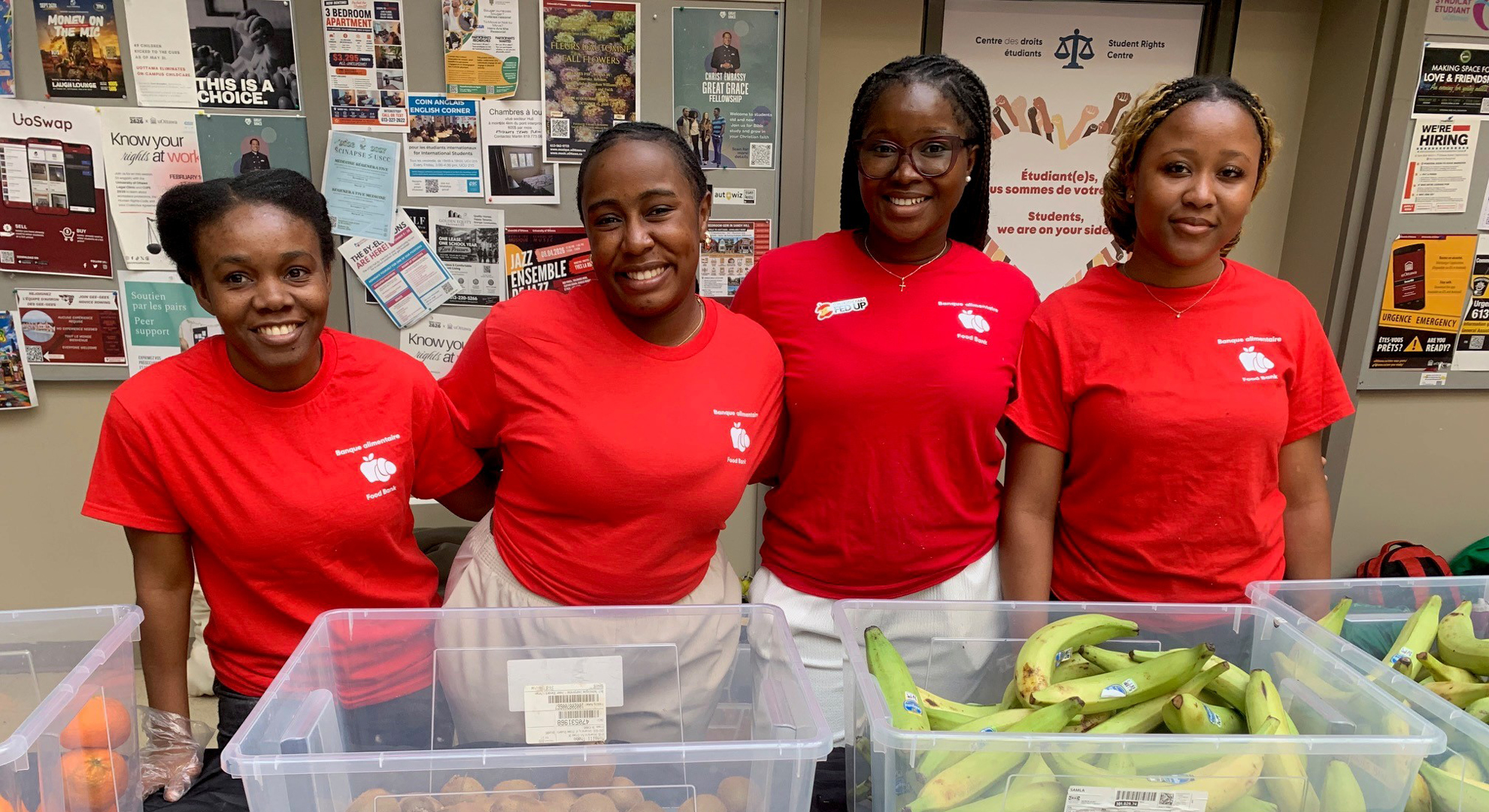
Fresh produce market volunteers

Awareness, accessibility and affordability

Objectives

  • Increasing student awareness and improving navigation of food security supports
  • Ensuring that food security supports have sufficient capacity and are accessible at times and locations that reflect diverse student needs, in a way that reduces stigma and preserves dignity
  • Mitigating reliance on emergency supports through upstream measures, including food skills programming, affordability initiatives and campus-community food partnerships
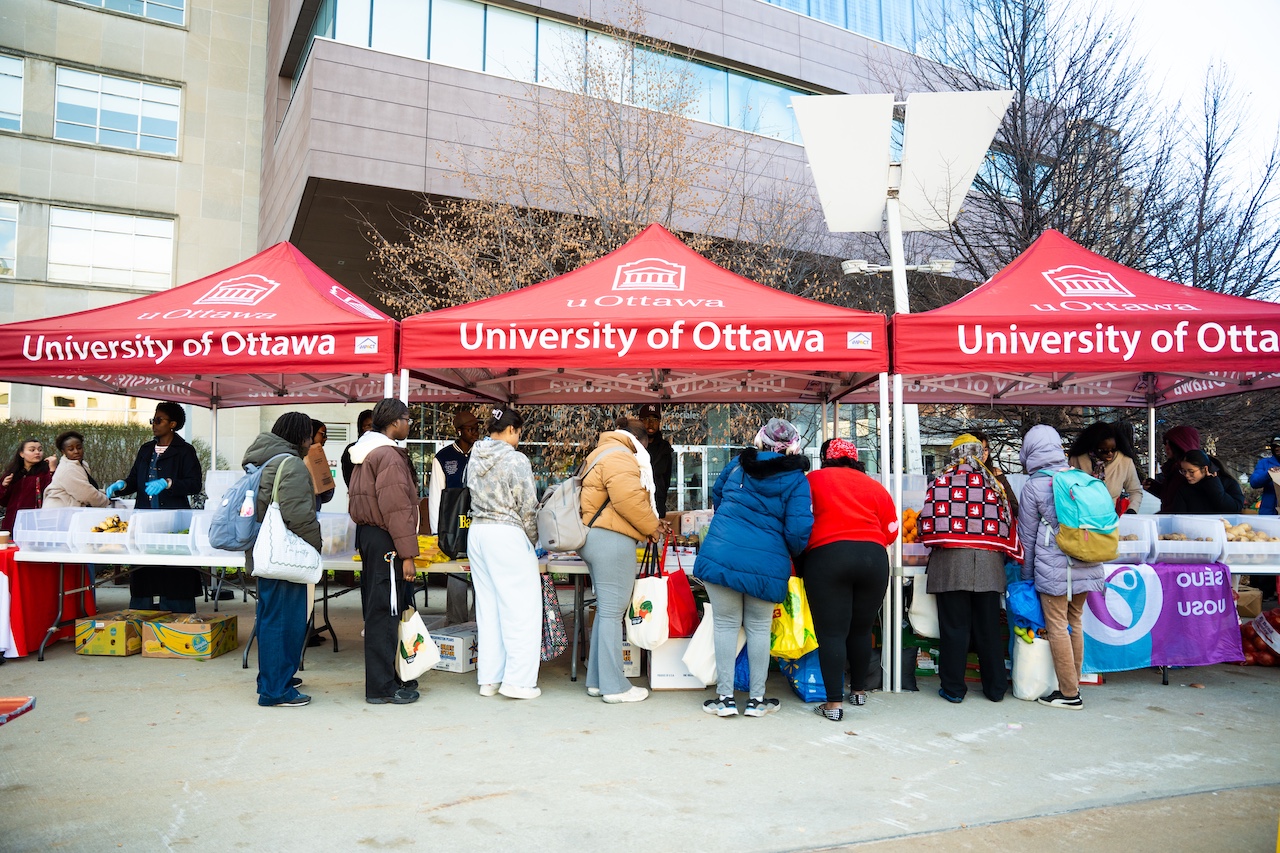
Students at Pop-up Grocery

Monitoring, evaluation and improvement

Objective

  • Establishing monitoring and evaluation processes using student feedback to report progress transparently and drive continuous improvement.

Initiatives and actions planned in Year 1 of the strategy

  • The onlineFood Support Hub, which helps students find food resources on and off campus
  • An extra 2,685 hot meals for Lees and Roger Guindon campuses through the University of Ottawa Students’ Union (UOSU) Fed-up campaign
  • 2,200 more bags of produce at the UOSU’s free produce market — double what was provided last year
  • UOSU food bank capacity expansion, adding 377 more food hampers
  • Pay-what-you-can produce market pilot project, to provide 1,900 food hampers
  • 50% increase in Wellness Lounge snacks
  • Free produce distribution to around 100 students at the Mashkawazìwogamig Indigenous Resource Centre, in addition to the centre’s soup and bannock lunches and other events



 

UOSU President 2026-27 Elnaz Enayatpour
““For some students, food insecurity can affect their energy levels, motivation and, ultimately, how well they do in school. That’s why this initiative is so important and why the UOSU is so proud to see a food support plan come to life.””

Elnaz Enayatpour

— University of Ottawa Students’ Union president

Food Security Network

A food security network with representatives from the UOSU, the Graduate Students’ Association (GSAÉD), faculties and services across the University will oversee plan implementation. The University’s Advancement Office will help fund plan initiatives. Key programs have been identified to increase the University’s capacity to support food strategy objectives over the next five years.

Guiding principles

  • Equity, diversity and inclusion
  • Reliance on data and evidence 
  • Student expression and participation
  • Accountability and transparency 
  • Responsiveness and resilience

Background

Students before TBT building

The food security strategy has its roots in Healthy Plates, a collaborative project launched by uOttawa, the UOSU and the Ottawa Neighbourhood Study at Bruyère Health Research Institute in 2024–2025.

The project began after the UOSU raised concerns about the number of students asking for food support. Healthy Plates examined student food insecurity on campus, leading to the Healthy Plates Summit in October 2025, which brought partners together to co-create a practical strategy.

According to Statistics Canada, there are three levels of food insecurity: marginal, moderate and severe. Those experiencing severe food insecurity might miss meals, reduce their food intake or, in extreme cases, go days without food.

The 2025 Canadian Campus Wellbeing Survey found that 42% of uOttawa students are food insecure to some degree, 18% are considered moderately food insecure and 13% are considered severely food insecure. Furthermore, a fall 2025 survey of graduate students found that almost half of respondents had cut meal sizes or skipped meals once or more in the past 12 months due to the cost of food. One in five reported going a whole day without eating due to lack of money.