
Geomatics is a rapidly expanding branch of geography, with concrete applications in areas such as healthcare planning, epidemiology, criminology, defence and security, disaster management, environmental and resource monitoring and urban planning. Geographic Information Systems (GIS), remote sensing and global positioning systems have made it easier to capture, manage and visualize geospatial information. From producing more efficient transit schedules to mapping disease outbreaks or assessing the seismic or health risks associated with our built environments, geomatics plays an essential role in supporting decision makers.

Geomatics
Program overview
DURATION
LOCATION
LANGUAGE
OPTIONS
Why choose this program

Advanced Technical Skills: You will develop strong proficiency with essential geomatics tools such as GIS, remote sensing, GPS, digital mapping, and spatial analysis. These skills are crucial for interpreting geographic data, monitoring environmental change, and managing natural disaster situations.
Flexible and Interdisciplinary Program: The microprogram integrates easily into most BA and BSc programs within the Faculty of Arts, allowing you to personalize your academic path based on your interests. You will take courses in geography, computer science, mathematics, statistics, cartography, and geospatial technologies, while adding a recognized specialization that will appear on your official transcript.
Diverse Career Opportunities: Prepare for a wide range of professional pathways, including GIS analyst, remote sensing specialist, geomatics technician, or environmental analyst. Graduates gain the scientific knowledge and technical skills needed to become leaders in these rapidly growing fields.
Program structure
Browse program options
This microprogram can be integrated into most of the BA and BSc programs of the Faculty of Arts. The 12 course-unit microprogram in Geomatics allows students to develop competencies in geomatics applications in view of applying them to a wide variety of fields and disciplines. The field of geomatics uses science and information technologies to gather and manage spatial data. It draws on a variety of disciplines such as geography, computer science, mathematics, as well as GIS, GPS, and remote sensing. The applications of geomatics include health-care planning, epidemiology, criminology, environmental monitoring and urban planning. It is ubiquitous in today’s society; there are numerous examples of this including the creation of the Centre for Geography and Exploration in Ottawa, the evolution of Google Maps, the navigation of autonomous vehicles, and the growing use of satellite remote sensing of the environment.
The name of the option will appear on your transcript. Adding one or several options to your degree allows you to be the architect of your degree and develop additional competencies beyond your fields of study.
Admission requirements and deadlines for Geomatics
After your studies

After completing your undergraduate studies in the Geomatics, you have two main paths to consider: continuing your studies within your Specialization or Major (for example, an Honours BA in Geography) or entering the workforce.
You may choose to pursue graduate studies in your main program, such as a Master’s degree (MA), to deepen your knowledge and develop advanced research, analytical, and critical‑thinking skills. A research‑based MA is ideal if you wish to specialize in a specific area or eventually pursue a PhD.
You may also decide to enter the job market directly. Your degree can lead to a variety of careers in fields such as Land Surveyor, Environmental officer, Cartographer, Urban planner and Urban geographer. These opportunities allow you to apply your skills in programming and complex problem solving in real-world settings.
Whether you choose to continue your studies or transition into the workforce, your degree provides a strong foundation for building a career related to the Geomatics.
Tuition and fees
Student experience
Undergraduate Students Association GAIA
Gaia is the Geography, Environment and Geomatics Student Association. They serve and represent the student bodies of these programs and to help better your university experience.
“Gaia“ (pronounced guy-a), according to Greek Mythology, is the goddess of the Earth. James Lovelock used the term in the 1970s to describe the earth as a living, self-regulating organism.
“Gaia“ (pronounced guy-a), according to Greek Mythology, is the goddess of the Earth. James Lovelock used the term in the 1970s to describe the earth as a living, self-regulating organism.
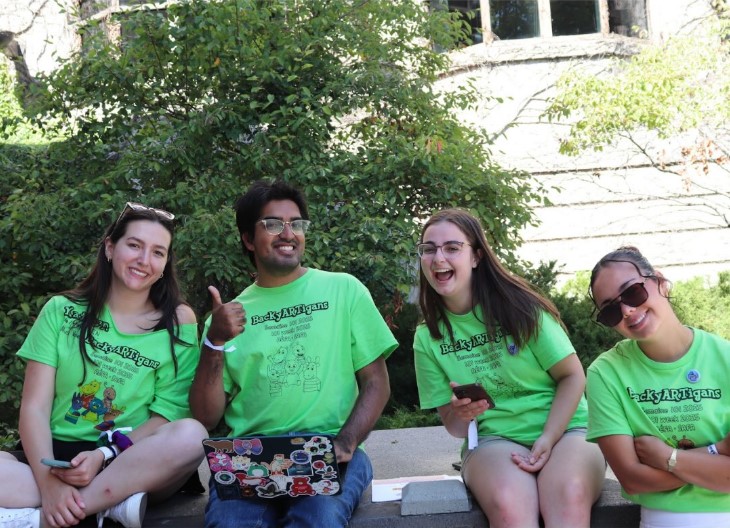
Student Association of the Faculty of Arts (SAFA)
SAFA represents the interests of undergraduate students of the Faculty of Arts within the UOSU, the Faculty, the University, the community, and the provincial and federal governments. The students’ association also works to foster a sense of community through social, academic, and cultural events, while at the same time offering a variety of services to its members.

Geography Graduate Students Association GGSA
The GGSA is a departmental organization responsible for supporting and representing graduate students in the Department of Geography, Environment and Geomatics at the University of Ottawa. We allow the voices of graduate students to be heard by sitting in and voting at department assemblies. We also organize social events to encourage human geographers, physical geographers, and geomatics specialists to interact with and learn from each other.
Need help?

Contact us
Question about this program? We are here to help!

Meet our student recruitment officer
Does the transition to university seem a bit intimidating?
Book an appointment with our student recruitment officer