The Archives and Special Collections maintains collections of rare manuscripts, rare printed books, artist's books, facsimiles, pamphlets, and periodicals/newsletters.

Our holdings

Our collections have been formed over time by donations, purchases, and transfers from the general collection.

All items in these special collections are inventoried in the library catalogue which can be accessed via the OMNI tool available on the Library's homepage.  

The Manuscript Collection

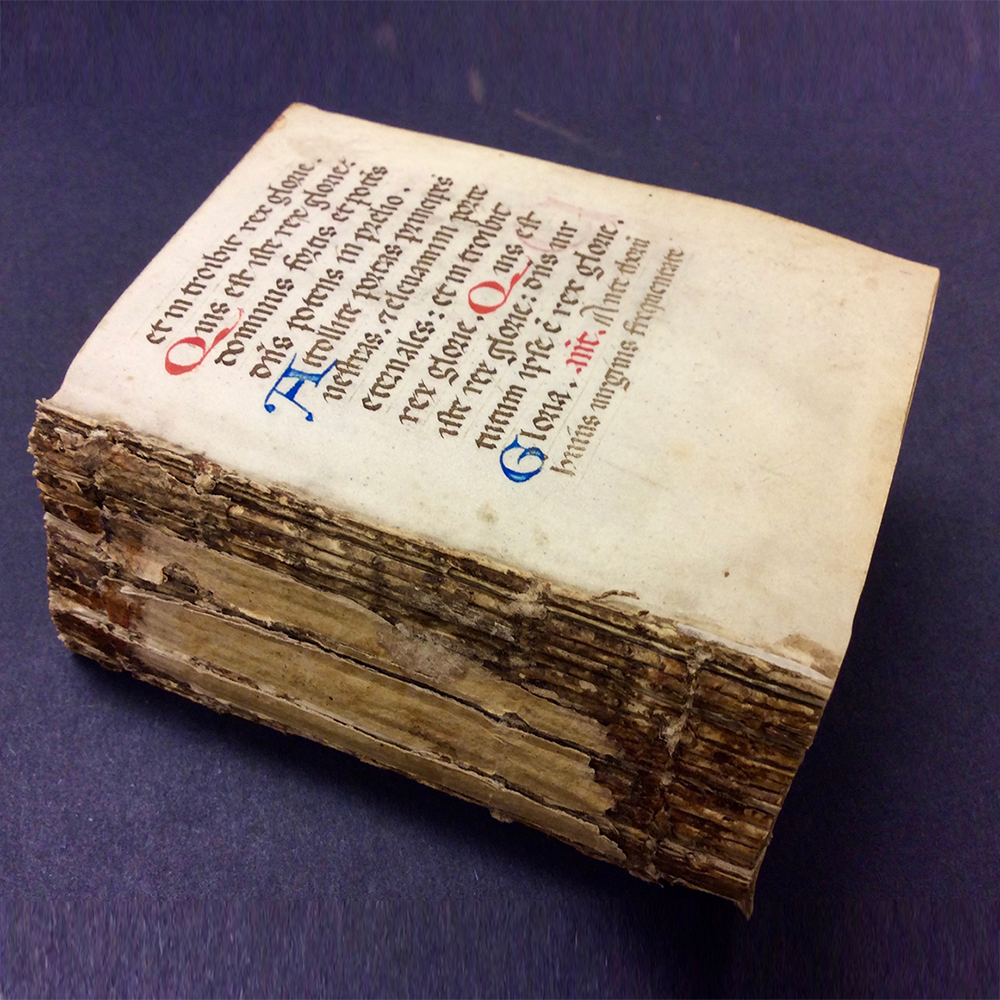
Hours of the Virgin, 1450

The Manuscript Collection encompasses a wide variety of subjects, forms, and periods. Most manuscripts are produced on parchment or paper and are bound. The oldest manuscripts date from the late 15th century, while the most recent date from the 20th century. Among the earliest are two Books of Hours: The Hours of the Virgin[BX 2024 .A2 1450] intended for daily use by its owner, with sober writing and no illuminations, and the Book of Hours for use in Rome[BX 2080 .L59 1495], produced at the end of the 15th century and richly illuminated with miniatures attributed to the Master of Jean d’Albret. These manuscripts reflect both the evolution of the book and the practices of scribes during the early development of printing.

Printed Book Collection

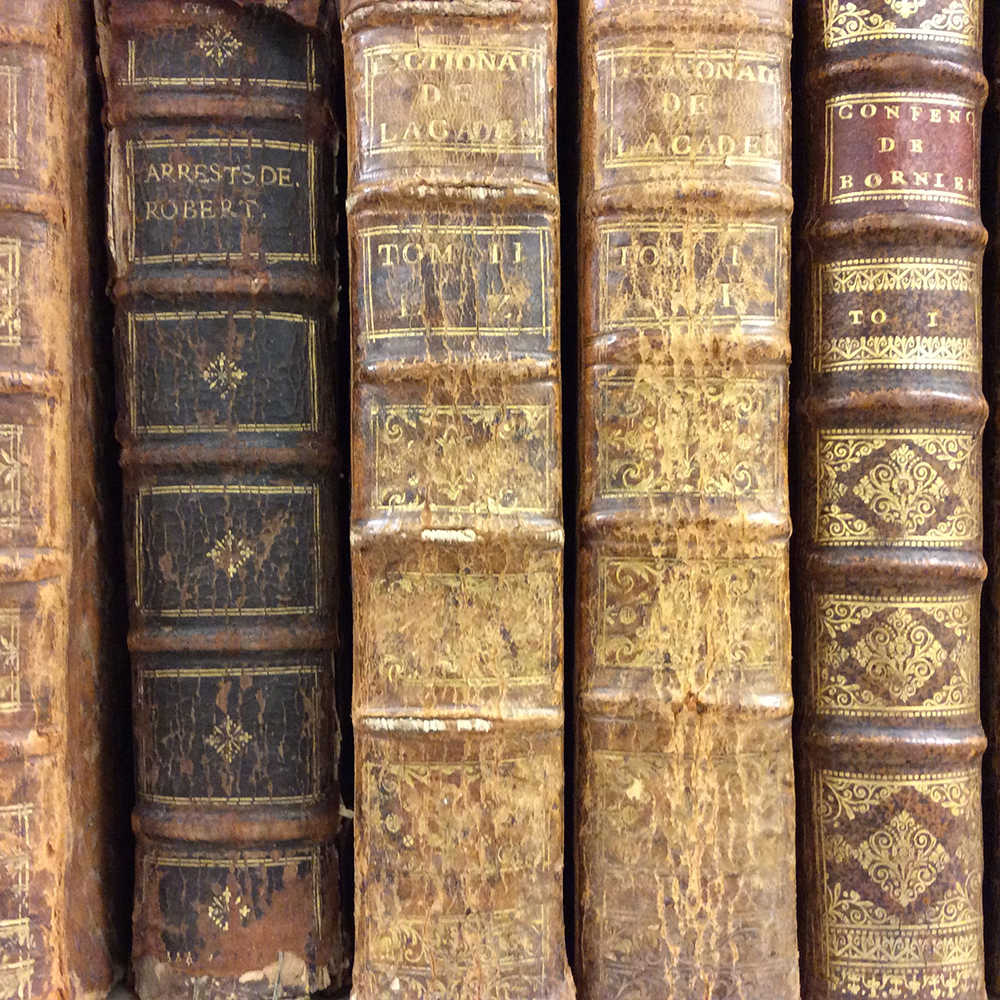
Rare books

The Rare Book Collection includes printed works dating from the 15th to the 21st centuries, covering a wide range of subjects such as medicine, law, literature, philosophy, natural sciences, geography, architecture, history, and the arts. The collection brings together publications from Europe and America, as well as a significant body of Canadiana, including both monographs and European and Canadian periodicals from the 17th, 18th, and 19th centuries.

The earliest printed books, produced using the first typographical techniques, are known as incunabula—a term derived from the Latin incunabula, meaning “cradle.” These works were published between the invention of printing, around 1455, and the end of the year 1500. The collection also includes post-incunabula, published during the first half of the 16th century, illustrating the transition between the early days of printing and more modern book production.

Collection of artist's books and art books

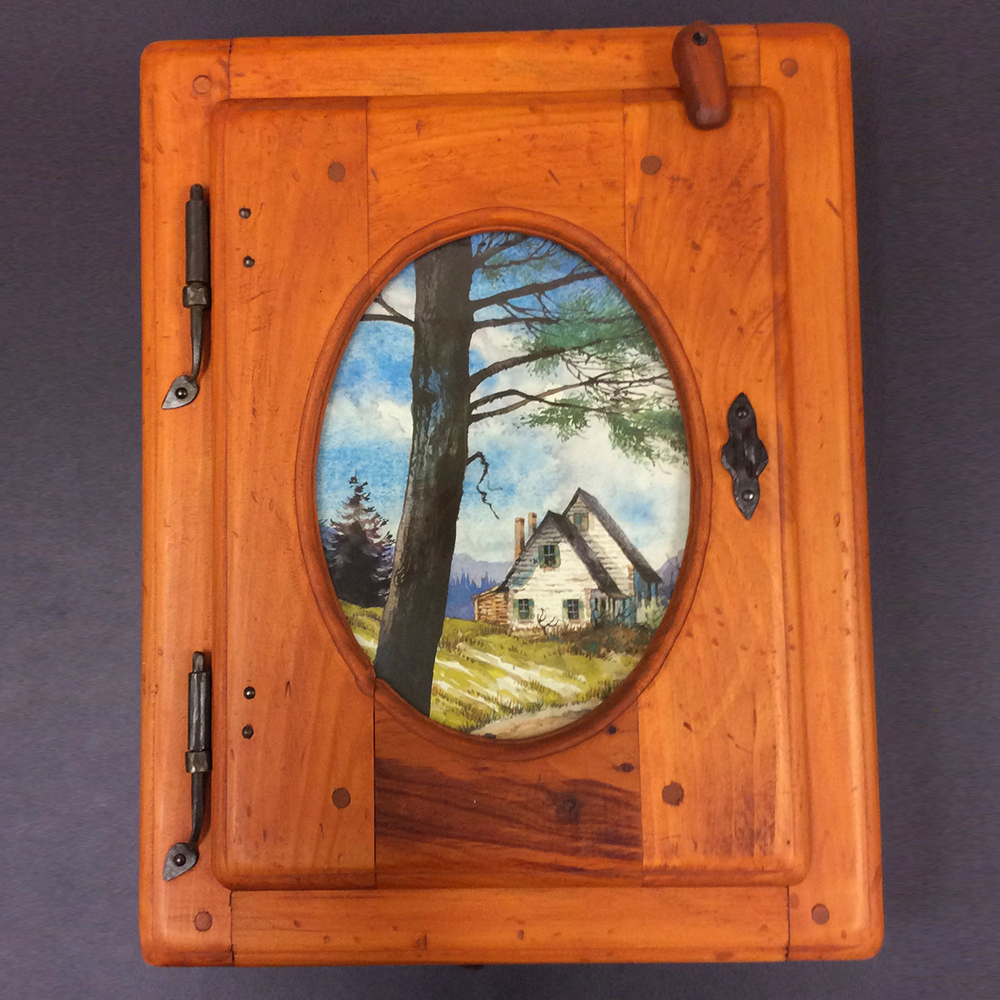
Un homme et son péché, 1979

The ARCS collection of art books and artist's books reflects the richness of artistic and editorial practices centered on the book. It brings together works in which the book becomes a creative space, uniting artists, typographers, and printers around diverse experimental and aesthetic forms. The collection includes contemporary artists’ books, fine press editions, and illustrated works produced by Canadian and international art presses. It also contains publications on visual and graphic arts that shed light on the relationship between text, image, and the materiality of the book.

A notable section highlights artists' books created in Quebec during the 1960s and 1970s, reflecting the creative vitality and dialogue between poetry and visual art in that period.

Collection of pamphlets

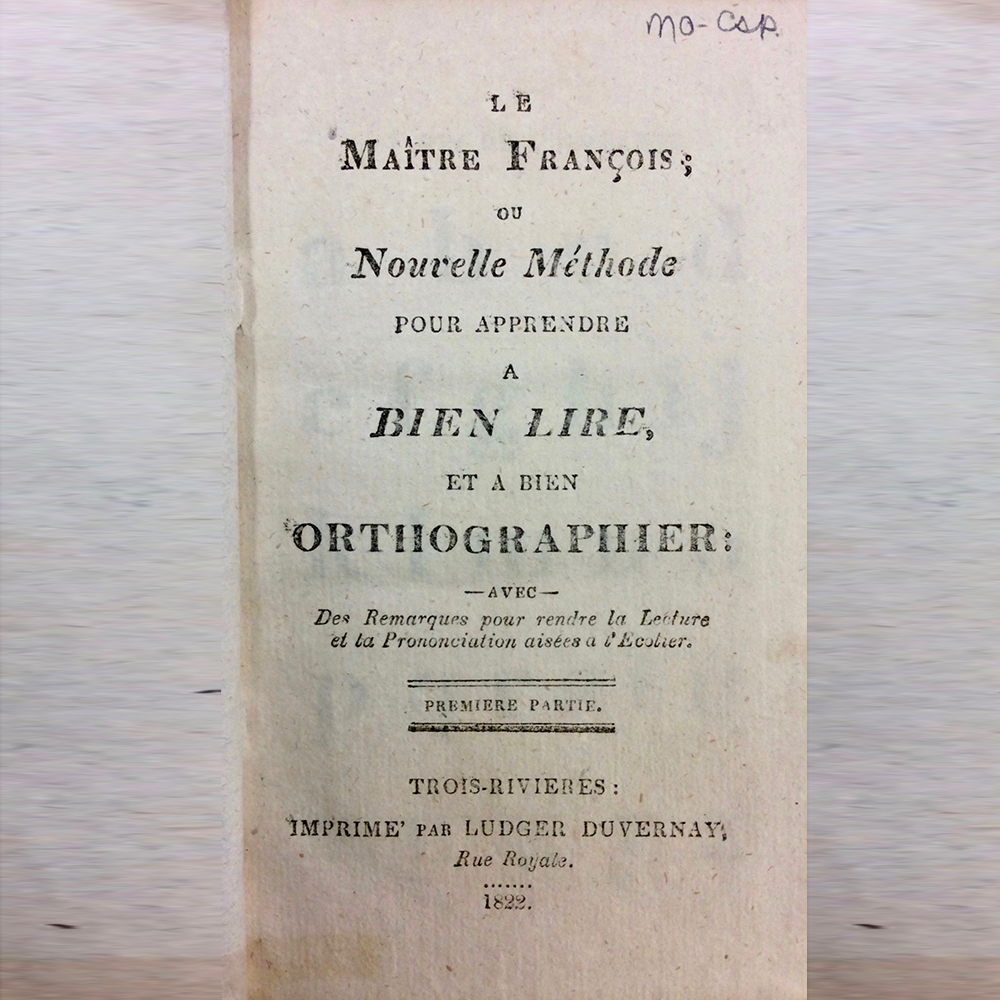
Le Maître françois, 1822

The Pamphlet Collection includes nearly 6,000 printed documents. The oldest pamphlet is dated 1774 and the most recent is from the 1990s. Due to their smaller size and lower quality binding (if present), pamphlets were typically ephemeral and tended to disappear quickly from circulation. The collection at the Archives and Special Collections is thus of particular importance and contains several very rare items.

The ARCS collection of pamphlets includes a large selection of pamphlets published in Canada. The oldest of these were published by the famous printer Ludger Duvernay in the first half of the 19th century, including several scholarly manuals Le Maître françois (1822),  Nouveau traité abrégé de la sphère(1829) and Nouvel alphabet pour les commençants (1830).

Collection of facsimiles

A facsimile aims to be the most faithful possible reproduction of an original document—book, manuscript, drawing, or work of art—created to closely capture de appearance and texture of the source. Preserved in major libraries, archives, and museums around the world, the originals reproduced facsimile are often too rare or fragile to be handled directly. Used in teaching, research, and preservation, facsimiles allow scholars and readers to explore these treasures in accessible form.

The ARCS facsimile collection brings together more than a hundred titles, ranging from illuminated medieval manuscripts such as Les Très Riches Heures du Duc de Berry, Le Livre de chasse by Gaston Phébus, and The Hours of Henry VIII, to reproductions of early printed works like La Pantagruéline prognostication by François Rabelais. It also includes facsimiles of modern literary manuscripts by major authors, including Ulysses by James Joyce. The facsimile collection thus offers a journey through the history of the book, art, and writing, accessible to everyone.

The Bernard and Sylvia Ostry Collection

Bernard and Sylvia Ostry donated books and documents from their personal collection to the Morisset Library at the University of Ottawa in 1985. This donation now forms the Bernard and Sylvia Ostry Collection held at the Archives and Special Collections.

The collection includes approximately 5,000 books and pamphlets, as well as some archival documents. It is an important resource for the study of Canadian and international history, economics and politics. The collection also includes works related to philosophy, literature, religion and the arts. Many of the works in this collection are signed by the authors.

The collection contains about 750 books on Canadian history, politics, economics, and about 400 pamphlets by Canadians or about Canada. These pamphlets include speeches by many political actors during the Second World War, as well as numerous books related to economic and statistical issues.

Among the important elements of the collection is a collection of about 275 books and pamphlets on Christian socialism, dealing mainly with the Owenist movement derived from Robert Owen's utopian socialist philosophy (1771-1858). This movement began in England and was spread in the United States by Robert Dale Owen (1801-1877) son of Robert Owen who led the utopian community of New Harmony in Indiana. Works on the development of socialism and workers' movements complete this collection. The collection includes volumes on the French Revolution and its aftermath, works by Marx, Engels, Lenin, Trotsky, books on the socialist movement in Britain in the 1930s. It includes publications of the Left Wing Book Club that were distributed exclusively to its members, as well as books by political thinkers of the time such as Belfort Bax, Edward Hallet Carr, G.D.H. Cole, John Strachey.

Another important aspect of the collection is the collection of about 260 pamphlets about the Far East from 1870 to 1938. These documents cover history, trade, the Opium issue, as well as various aspects related to culture and development. The collection includes 19 volumes from the second series of the Transactions of the Asiatic Society of Japanpublication.

In the literary section authors such as Geoffrey Chaucer, Shakespeare, Sir Walter Scott, George Eliot, and Charles de Kock are represented. This section also includes literary reviews and collections of Canadian poetry.

The Ostry Collection can be accessed via the library catalogue.

chat loading...