

At both the masters and doctoral levels, the Department of Communication offers students the opportunity to deepen their knowledge and critical thinking skills while refining their ability to identify, analyze, and resolve complex issues. Our students deepen their understanding of the social, political, cultural, regulatory, technological, and economic aspects of contemporary society. Our programs offer challenging, dynamic and bilingual seminars for advanced research in the field of communication.

Communication - Graduate Studies
Program overview
Level
Option
LANGUAGE
Why choose this program

Studying Communication is an excellent opportunity to deepen your understanding of how communication shapes contemporary society and influences social, political, cultural, technological, and economic change. Offered in both English and French, the program allows you to develop advanced analytical, research, and critical thinking skills while exploring complex issues in areas such as media studies, organizational communication, digital technologies, public relations, health communication, and crisis communication. Through dynamic seminars, research projects, and optional co-op or international opportunities, you will gain valuable experience conducting research, analyzing data, communicating findings, and working in diverse professional environments. The program also provides the flexibility to specialize in areas of interest, develop expertise in emerging communication challenges, and engage with internationally recognized scholars, preparing you for leadership roles in an increasingly interconnected world.
Program structure
Browse program options
The MA is research-based: students must take a certain number of compulsory and optional courses (4 for the thesis option, 6 for the research paper). Students then submit a research proposal in collaboration with a professor from the Department of Communication. The proposal is evaluated by one or more members of the faculty, after which students undertake their thesis (collecting, analyzing, and interpreting data, writing up results, etc.). The MA program (which serves as a gateway to eventual doctoral studies) represents a unique opportunity to develop an area of expertise and specialization by doing original research. Students enrolled in this program develop skills related to data analysis and interpretation, methodology, the communication of results, etc.
NEW! MA in Communication with a concentration in Health Communication
The University of Ottawa’s department of communication has an internationally recognized expertise in the field of communication and health. Students in this program have the opportunity to develop knowledge and expertise by exploring issues such as patient /healthcare provider communication; crisis and risk communication (e.g. health crises, public health crises); healthcare services in the context of telemedicine and telehealth; the design and use of digital health technologies; health communication strategies(such as for vulnerable populations); public health communication campaigns; and much more.
Overview
- Courses and seminars with research project (18 months)
- Basic courses in communication and health
- Digital health seminar: digital strategies, self-management, telemedicine and patient/provider communication, etc.
- Risk and crisis communication seminar, such as Covid-19
- Internship (optional credits)
- Master of Arts Communication
Admission requirements and deadlines for Communication
After your studies

After completing graduate studies in Communication, you can pursue careers in communications management, public relations, media and digital communications, strategic communications, content development, policy analysis, corporate communications, community engagement, or organizational communication. Graduates may also work in government agencies, non-profit organizations, media organizations, healthcare institutions, private companies, and international organizations. The program develops advanced skills in research, critical analysis, data interpretation, project management, and professional communication, preparing graduates to address complex communication challenges in an evolving digital and global environment. For those interested in further academic study, the research-based stream also provides a strong foundation for doctoral studies and careers in research and higher education.
Tuition and fees
Student experience

The Communication Graduate Students’ Association (CGSA)
Membership of the Association consists of all registered graduate students, full-time and part-time, in the Communication Program at the University of Ottawa.

The Communication Student Association (CSA)
The Communication Students' Association (CSA) works to ensure an amazing university experience for students in Communication, Public Relations, Digital Journalism and World Cinemas.
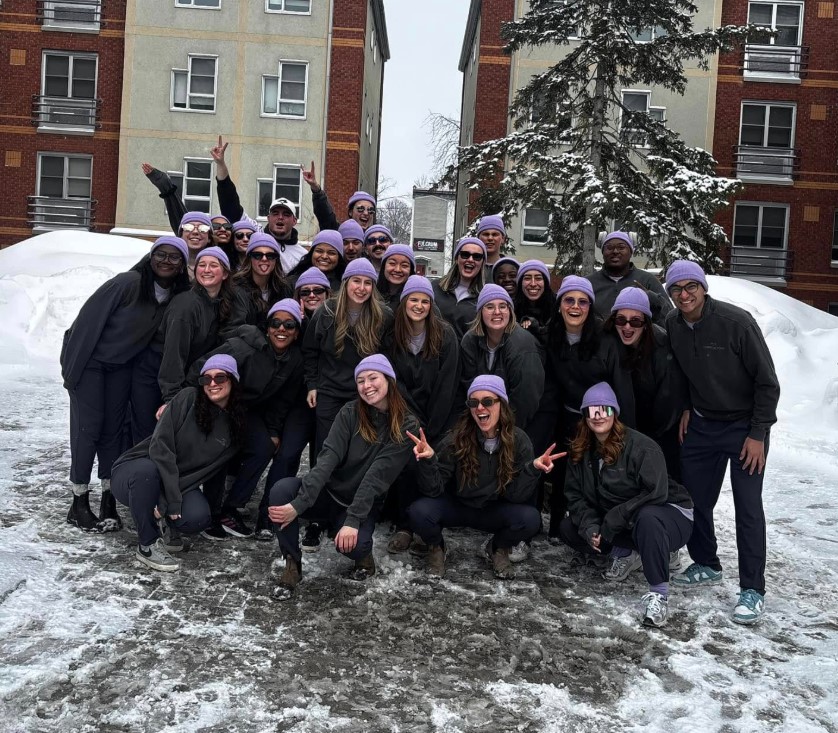
JDLC Ottawa
You speak French? Join the "Jeux de la communication" (JDLC), the University of Ottawa’s team knows how to stand out, both academically and socially, at this prestigious competition.




Contact us
Department of Communication
Graduate studies
Simard Hall, room 416
60 University Private
Tel.: 613-562-5800 ext. 5439
Fax: 613-562-5340
[email protected]